Gastric Sleeve Surgery Cost 2026: The Factors That Shape the Price
The cost of gastric sleeve surgery varies from person to person depending on many factors: the hospital, the surgical technique, the team's experience, the materials used and postoperative follow-up. We explain the factors that shape the price and the scope of the process in a neutral way.
Doç. Dr. Hasan Abuoğlu··Last updated: October 21, 2026
Medically reviewed by Assoc. Prof. Dr. Hasan Abuoğlu · July 2, 2026
Gastric sleeve surgery (sleeve gastrectomy) is a bariatric surgery method in which about 80% of the stomach is removed laparoscopically and the remaining portion is shaped into a tube. The cost of this surgery is not a single fixed figure; it varies from person to person according to the patient's clinical condition, the technique applied and the scope of the process. In this article, we explain the factors that shape the cost of gastric sleeve surgery and what is included in the treatment process in a neutral way.
Why does the cost of gastric sleeve surgery vary from person to person?
Because the cost of gastric sleeve surgery depends on variables such as the patient's body mass index (BMI), accompanying conditions, the chosen hospital and the surgical team, it is not appropriate to give a standard price list. Under healthcare advertising regulations, an exact figure can only be shared on an individual basis after a physician's examination and the necessary tests. The factors below will help you understand why the cost differs.
Factors that affect the cost of gastric sleeve surgery
Factor
Effect on cost
Hospital type and equipment
Operating-room technology, intensive care availability and accreditation level affect the cost.
Experience of the surgical team
The experience of the General Surgery specialist performing the operation and of the team influences process planning.
Surgical materials used
The brand and number of laparoscopic staplers and consumables vary from patient to patient.
Anaesthesia and hospital stay
General anaesthesia and an average 2 to 3 day stay are included in the cost.
Preoperative tests
Blood tests, endoscopy, imaging and any necessary consultations are planned.
Postoperative follow-up
Dietitian support and check-up visits are important for long-term results.
Presence of accompanying conditions
Conditions such as diabetes and hypertension may require additional assessment.
What does the treatment process usually include?
Gastric sleeve surgery is not just an operation but a process that includes what comes before and after it. Although the scope varies by clinic, it typically involves the following steps:
Preoperative assessment: physician's examination, blood tests, endoscopy and any necessary imaging.
Operation: performed laparoscopically (minimally invasive), taking about 1 to 1.5 hours on average.
Hospital stay: usually 2 to 3 days of observation.
Postoperative nutrition plan: a gradual transition from liquid to pureed and then solid foods.
Check-ups and follow-up: dietitian support and regular check-up visits.
Insurance coverage and process planning
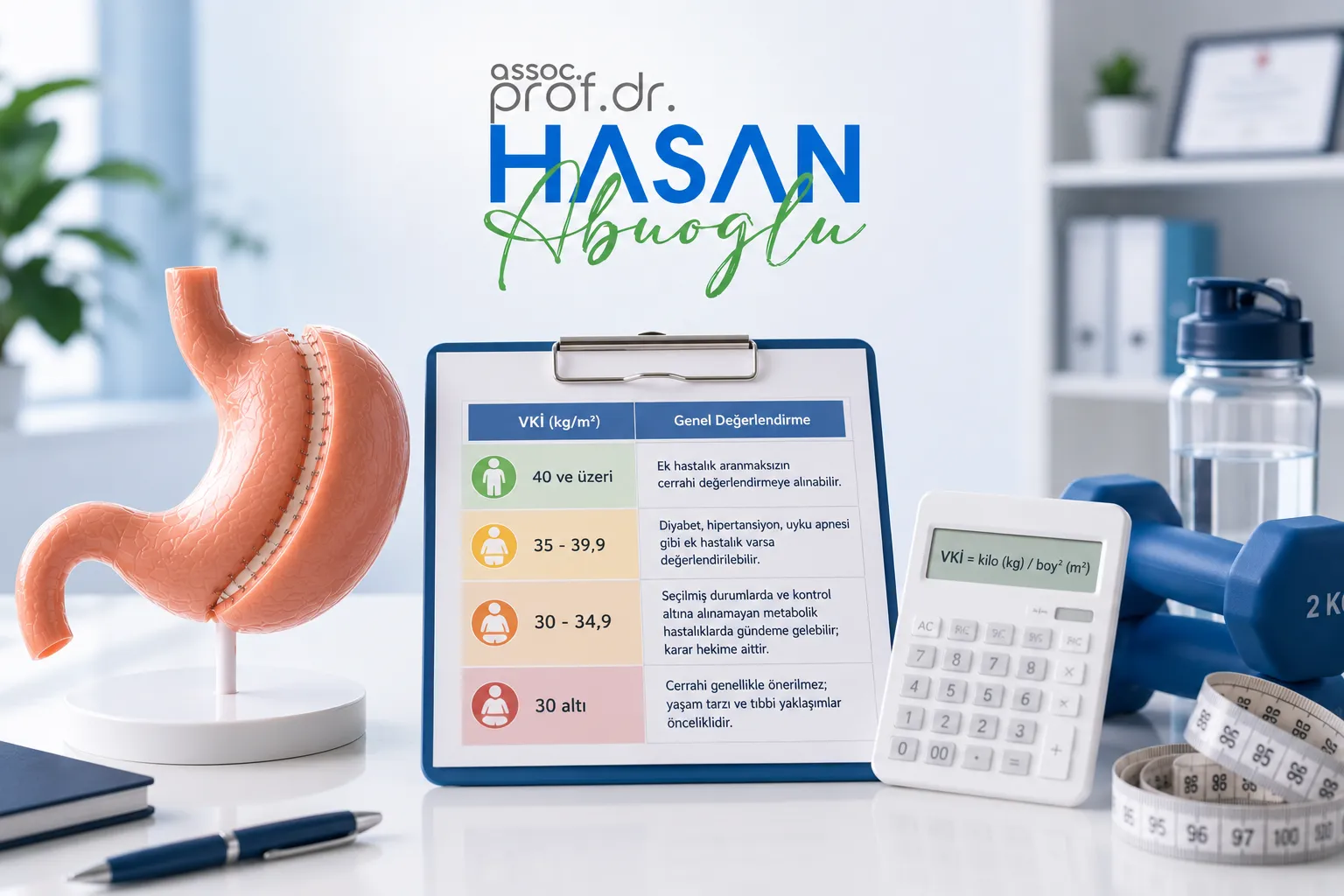
Bariatric surgery may be considered for coverage under public health insurance (for example, Turkey's SGK) if certain medical criteria are met. In general, patients with a BMI of 40 or above, or a BMI between 35 and 40 accompanied by another condition such as diabetes or sleep apnoea, are examples of those who meet these criteria. Eligibility is determined according to current regulations and a physician's assessment. Because coverage for bariatric surgery differs from one private insurance policy to another, it is advisable to confirm the scope of your insurance in advance. For international patients, insurance coverage varies by country and policy, and the treatment plan becomes clear only after a physician's evaluation.
What to consider when comparing prices
Gastric sleeve is a surgical procedure, and it is not right to base the decision on cost alone. Hospital conditions, the experience of the surgical team, postoperative follow-up and patient safety are as important as the cost for a safe and lasting result. When evaluating a treatment plan, it helps to consider the whole process (before, during and after the operation) and the follow-up support offered to you as a whole.
How to get personalised information about gastric sleeve surgery
The most accurate information for you is provided by your physician through a personalised assessment after an examination and the necessary tests. You can use our BMI calculator to find out your body mass index, and you can contact our clinic to learn about your eligibility and the process.
Personalised Assessment
You can arrange a preliminary consultation to learn about your eligibility and the treatment process.
Common questions on this topic — answered by Dr. Abuoğlu.
No. Because the cost depends on the hospital, the surgical technique, the materials used and the patient's clinical condition, it is specific to each individual and is determined after an examination.
Although it varies by clinic, the scope generally includes preoperative tests, the operation itself, the hospital stay, and postoperative follow-up together with dietitian support.
If certain medical criteria are met (e.g. BMI thresholds and accompanying conditions), it may be considered for coverage under public health insurance such as Turkey's SGK. Exact eligibility depends on current regulations and a physician's assessment.
Laparoscopic gastric sleeve surgery takes about 1 to 1.5 hours on average. The duration may vary depending on the patient's condition.
Patients are usually kept under observation in hospital for 2 to 3 days and then discharged.
Under the current 2022 ASMBS/IFSO guideline, assessment for surgery is recommended from a BMI of 35 upwards, with no accompanying condition required; people with a BMI of 30–34.9 who have a metabolic disease such as type 2 diabetes may also be assessed. The eligibility decision is made after a physician's examination.
Establishing a stable eating routine and maintaining the results depend on postoperative dietitian support and regular check-ups. Follow-up is an integral part of the process.
Gastric sleeve is a surgical procedure; hospital conditions, team experience, patient safety and follow-up support are as important as the cost. The decision should be made through a holistic assessment.
Sleeve gastrectomy explained in detail: what it is, how it works, who is a candidate, what to expect before and after surgery. Comprehensive guide by Assoc. Prof. Dr. Hasan Abuoğlu, General Surgery.
Sleeve gastrectomy candidacy criteria: BMI thresholds, ASMBS/IFSO 2022 guidelines, comorbidities, contraindications. Comprehensive guide by Assoc. Prof. Dr. Hasan Abuoğlu, General Surgery.
Eligibility for gastric sleeve surgery is decided on body mass index (BMI) rather than weight alone. Current international guidance sets the threshold at BMI 35; the BMI 30-34.9 band is assessed when metabolic disease is present. We explain what those thresholds mean in kilograms, the age question and the decision process.
For detailed information about bariatric and metabolic surgery procedures, you may use the contact channels below. Initial consultations for international patients can be arranged remotely via video call or WhatsApp.


 Gastric Sleeve