Loading...
Loading...

Clear answers to the 30 most important questions about bariatric surgery.
The first questions patients ask at the most critical moments of the journey.
BMI is calculated by dividing weight (kg) by the square of height (m²). International guidelines typically consider bariatric surgery for a BMI of 40 kg/m² or higher, or a BMI of 35 kg/m² combined with comorbidities such as type 2 diabetes, hypertension or obstructive sleep apnoea. Final eligibility is determined through a multidisciplinary medical evaluation.
The most suitable procedure varies from patient to patient. BMI, comorbidities (type 2 diabetes, reflux, sleep apnoea), prior surgical history, eating habits and overall health are all taken into account. The decision is made as part of a multidisciplinary process involving the surgical team together with endocrinology, nutrition and psychology support.
Laparoscopic sleeve gastrectomy typically takes 60–90 minutes. Including anaesthesia induction and recovery, the total time in the operating area is around 2–3 hours. The exact duration may vary from patient to patient.
A typical post-bariatric nutrition plan is staged. For the first 2 weeks, a clear and full liquid diet is followed (water, sugar-free herbal teas, fat-free broth, protein-containing drinks). Pureed foods are introduced at weeks 3–4, and solid foods are generally introduced after week 6–8. The plan is individualised for each patient with dietitian support.
The international literature reports that mortality in modern laparoscopic bariatric surgery is generally low, typically within the range of 0.1–0.3%. Mortality risk varies with the patient's comorbidities, the type of procedure and the experience of the surgical team. Untreated morbid obesity itself carries significant health risks.
A planned stay of approximately 5–7 days in Istanbul is generally recommended: one day for pre-operative evaluation, one day for surgery, 2–3 days in hospital, and 1–2 days for post-operative follow-up and discharge. Fitness to fly is typically assessed around day 5 after surgery; the decision is made on an individual basis by the treating physician.
Basic questions about bariatric surgery
BMI is calculated by dividing weight (kg) by the square of height (m²). International guidelines typically consider bariatric surgery for a BMI of 40 kg/m² or higher, or a BMI of 35 kg/m² combined with comorbidities such as type 2 diabetes, hypertension or obstructive sleep apnoea. Final eligibility is determined through a multidisciplinary medical evaluation.
The most suitable procedure varies from patient to patient. BMI, comorbidities (type 2 diabetes, reflux, sleep apnoea), prior surgical history, eating habits and overall health are all taken into account. The decision is made as part of a multidisciplinary process involving the surgical team together with endocrinology, nutrition and psychology support.
Bariatric surgery is the general term for established surgical procedures used in the treatment of obesity. These procedures reduce the stomach's capacity and/or reroute the digestive tract to support weight loss. Sleeve gastrectomy, Roux-en-Y gastric bypass and mini gastric bypass are among the commonly performed techniques.
Bariatric and metabolic surgery can have a favourable effect on blood glucose control in patients with type 2 diabetes and obesity. The international literature reports meaningful rates of diabetes remission or reduced medication requirements, particularly after gastric bypass procedures. Individual outcomes vary; eligibility is assessed jointly by the endocrinology and surgical teams.
Coverage rules vary by country, insurance provider and type of facility. In many systems, coverage is granted for patients meeting specific BMI thresholds (commonly BMI of 40 kg/m² or higher, or 35 kg/m² with defined comorbidities). Patients are advised to confirm the current conditions directly with their insurance provider or local health authority.
Details about sleeve gastrectomy
Laparoscopic sleeve gastrectomy typically takes 60–90 minutes. Including anaesthesia induction and recovery, the total time in the operating area is around 2–3 hours. The exact duration may vary from patient to patient.
Hospital stay after sleeve gastrectomy is generally planned as 2–3 days. Discharge timing depends on the patient's post-operative clinical condition and the surgical team's assessment.
The international literature reports that, on average, around 60–70% of excess weight may be lost in the first year after sleeve gastrectomy. Weight loss depends on many variables including pre- and post-operative nutrition, physical activity, comorbidities and individual metabolic response. Outcomes vary from person to person.
After sleeve gastrectomy, stomach volume decreases to approximately 80–120 ml; a normal stomach holds around 1,500 ml. This leads to a significantly smaller amount of food consumed per meal. Over time, the stomach tissue may regain some elasticity.
Some patients may develop new reflux symptoms after sleeve gastrectomy or experience an increase in existing reflux. The likelihood is taken into account during pre-operative planning by assessing reflux history and anatomical factors. For patients with significant reflux, the surgical team may recommend a different technique such as gastric bypass.
In the laparoscopic approach, the procedure is performed through 4–5 small incisions of 0.5–1 cm in the abdominal wall. These scars generally fade over time, although individual healing varies. Open surgery is typically not required.
Preparation for surgery
A standard pre-operative workup includes complete blood count, biochemistry panel, thyroid function tests, ECG, chest X-ray, upper gastrointestinal endoscopy and a psychiatric assessment. Depending on the patient's clinical profile, cardiology, pulmonology and endocrinology consultations may also be added. The final list of tests is determined by the treating physician.
Most centres follow a low-carbohydrate, high-protein nutritional plan for around 10–14 days before surgery in order to reduce liver fat. This supports safer laparoscopic surgery. The specific plan is individualised based on the patient's weight, comorbidities and the team's protocol.
Smoking can negatively affect wound healing and increase the risks of respiratory complications and thromboembolism. For this reason, it is medically recommended to stop smoking at least 4 weeks before surgery and to remain smoke-free in the post-operative period.
The standard approach before general anaesthesia is to stop solid food intake for at least 8 hours and clear fluids for at least 2 hours prior to surgery. Fasting protocols may vary, so the specific instructions given by the treating physician should be followed exactly.
Recovery and lifestyle changes
A typical post-bariatric nutrition plan is staged. For the first 2 weeks, a clear and full liquid diet is followed (water, sugar-free herbal teas, fat-free broth, protein-containing drinks). Pureed foods are introduced at weeks 3–4, and solid foods are generally introduced after week 6–8. The plan is individualised for each patient with dietitian support.
Return to work depends on the type of job and the patient's pace of recovery. Office-based work is usually possible within 1–2 weeks, while physically demanding work may require 3–4 weeks. Driving is generally recommended only after a minimum of 2 weeks; the final decision is made under the physician's follow-up.
After bariatric surgery, reduced stomach capacity and/or changes in absorption can lead to a risk of inadequate intake of certain vitamins and minerals (B12, iron, vitamin D, calcium, folate). Multivitamin and specific mineral supplementation is generally recommended for at least 1 year after sleeve gastrectomy and lifelong after bypass procedures. Supplement doses are adjusted by the physician based on laboratory results.
Physical activity is increased gradually during recovery. Light walking is typically allowed in the first week; light cardiovascular exercise from weeks 2–4; moderate-intensity exercise from around week 6; and resistance training from around month 3. Appropriate timing for each patient is determined with the physician's approval.
After rapid and substantial weight loss, loose skin may appear on the abdomen, arms, chest and legs. Regular exercise, adequate protein intake and skincare may reduce this to a certain extent. In advanced cases, reconstructive/aesthetic options may be considered after evaluation by a plastic surgery specialist.
A standard follow-up schedule includes visits at months 1, 3, 6 and 12, followed by annual check-ups. Each visit typically covers weight monitoring, laboratory tests and review of vitamin and mineral levels. Long-term follow-up is important for the sustainability of outcomes.
Safety and potential complications
As with any surgical procedure, sleeve gastrectomy carries general risks including anaesthesia-related risks, bleeding, infection and thromboembolism. Bariatric-specific risks include staple/suture line leak, new or worsening reflux, and long-term vitamin and mineral deficiencies. The likelihood of these risks depends on patient-specific factors and is discussed in detail during the pre-operative informed consent process.
The international literature reports that mortality in modern laparoscopic bariatric surgery is generally low, typically within the range of 0.1–0.3%. Mortality risk varies with the patient's comorbidities, the type of procedure and the experience of the surgical team. Untreated morbid obesity itself carries significant health risks.
A staple/suture line leak refers to the escape of gastric content from the surgical line into the abdominal cavity. It is a potentially serious complication that can be managed when detected early and treated appropriately. Studies in the literature report this risk at low rates, generally around 0.1–1%. Early post-operative follow-up is important for timely detection.
Possible long-term issues include vitamin and mineral deficiencies (iron, B12, vitamin D), gallstone formation, reflux and — in bypass procedures — rare occurrences of internal hernia. Regular follow-up, monitoring of blood tests and appropriate vitamin and mineral supplementation help prevent and enable early detection of most of these issues.
Practical information for international patients
A planned stay of approximately 5–7 days in Istanbul is generally recommended: one day for pre-operative evaluation, one day for surgery, 2–3 days in hospital, and 1–2 days for post-operative follow-up and discharge. Fitness to fly is typically assessed around day 5 after surgery; the decision is made on an individual basis by the treating physician.
Yes. An initial clinical assessment can be conducted via video call after the patient shares relevant medical history and, where available, recent laboratory and imaging results. A full in-person examination is performed by the surgical team after arrival in Istanbul, and the final surgical plan is confirmed at that stage.
Routine follow-up laboratory tests can be performed in the patient's home country, with results shared with the surgical team for remote review. In-person follow-up visits in Istanbul are suggested around month 3 and month 12 where possible, but a hybrid model combining remote and in-person review can be arranged depending on the patient's circumstances.
International patients are supported by a coordinator throughout the process, including scheduling of appointments, pre-operative tests and post-operative review. Support with accommodation planning, transport between the hospital and the accommodation, and interpreter services where needed can be organised as part of the international patient pathway, in line with the Ministry of Health International Health Tourism Regulation.
Interpreter support is available in English, Spanish, Russian, Arabic and Bulgarian during consultations and the hospital stay. Consultations with Assoc. Prof. Dr. Hasan Abuoğlu may be conducted in English.
For detailed information about bariatric and metabolic surgery procedures, you may use the contact channels below. Initial consultations for international patients can be arranged remotely via video call or WhatsApp.
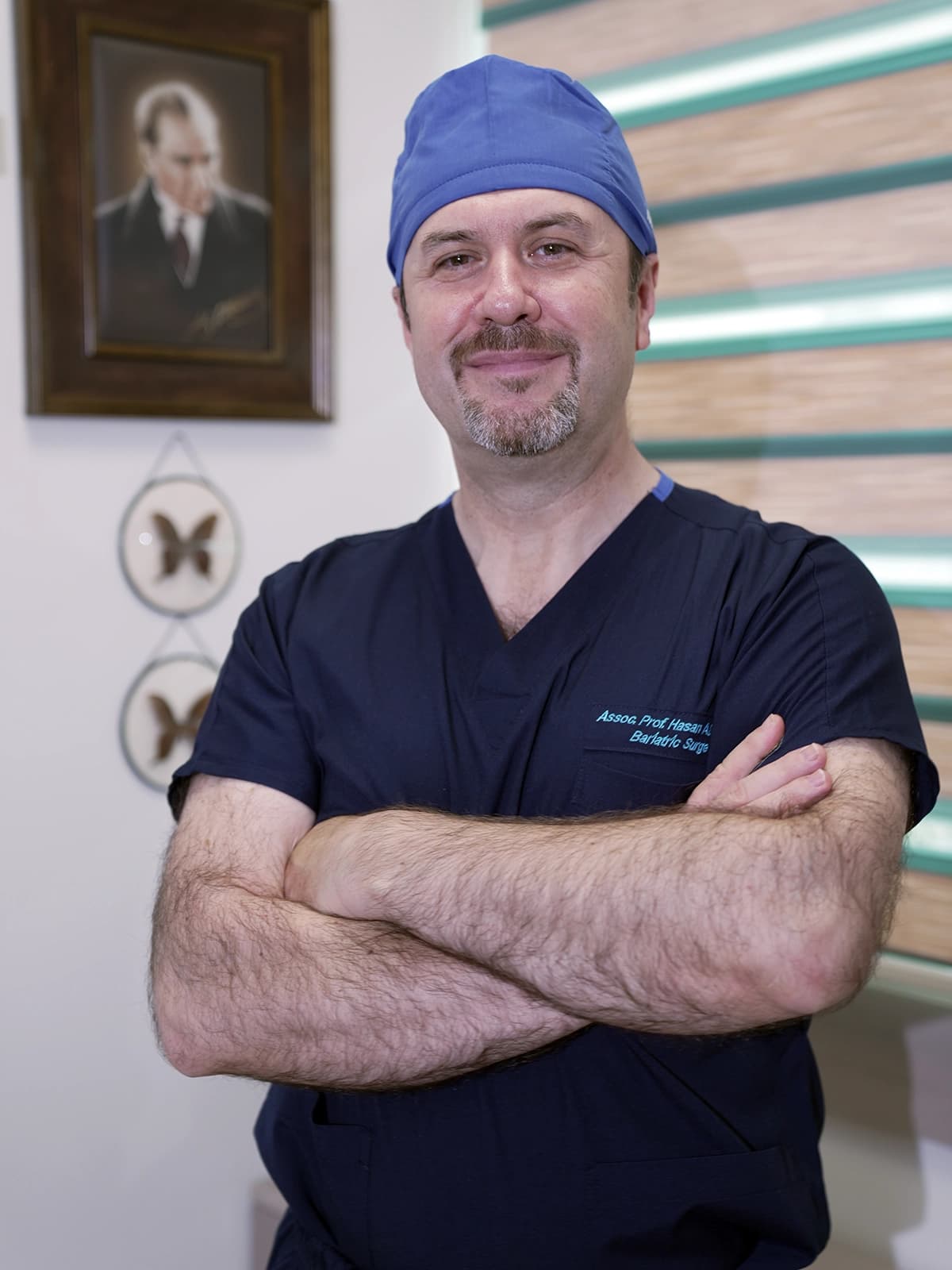
Assoc. Prof. Dr. Hasan Abuoğlu
Associate Professor of General Surgery