
This article was reviewed on July 1, 2026 by Assoc. Prof. Dr. Hasan Abuoğlu, Associate Professor of General Surgery, in accordance with the ASMBS/IFSO 2022 updated international guidelines and current peer-reviewed literature.
Sleeve gastrectomy is the most commonly performed bariatric procedure worldwide. However, not every individual with obesity is a candidate for this surgery. Proper candidate selection is critical for the safety and long-term success of the operation. This guide provides a comprehensive answer to: who qualifies for sleeve gastrectomy, what BMI thresholds apply, and in which situations is the surgery contraindicated, in light of the ASMBS/IFSO 2022 guidelines.
Sleeve Gastrectomy Candidacy Criteria
There are three main criteria groups for sleeve gastrectomy candidacy:
1. BMI (Body Mass Index) Criterion
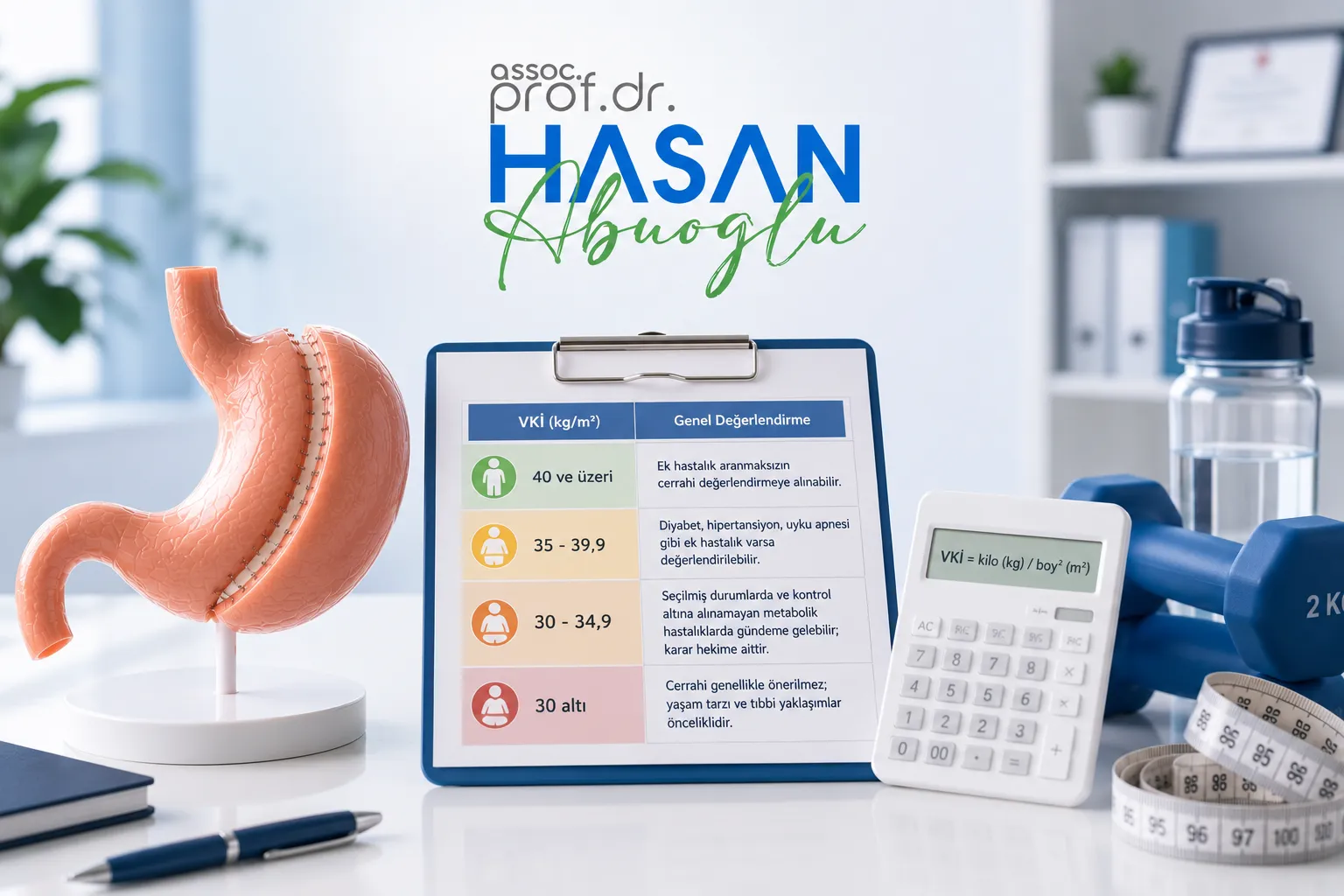
- BMI ≥ 35 kg/m²: Candidate regardless of comorbidities
- BMI 30-34.9 kg/m²: Candidate if comorbid metabolic disease (e.g., type 2 diabetes) present
- For Asian populations: BMI ≥ 27.5 kg/m² (with concomitant T2DM)
2. Medical Criterion
- Failure to achieve sufficient weight loss with lifestyle modifications
- Absence of serious medical contraindications
- Ability to comply with long-term postoperative follow-up
3. Psychosocial Criterion
- Adequate motivation and commitment to postoperative lifestyle change
- Absence of untreated severe psychiatric disease
- No active substance abuse
- Presence of social support system
Important: These criteria serve as general guidance. Individual eligibility is determined only after comprehensive medical evaluation and multidisciplinary team assessment.
BMI Calculation and Classification
BMI Calculation Formula
Formula
BMI = Weight (kg) / [Height (m) × Height (m)]
Examples
100 kg, 1.70 mBMI = 100 / (1.70 × 1.70) = 100 / 2.8934.6 kg/m²Class I obesity
120 kg, 1.65 mBMI = 120 / (1.65 × 1.65) = 120 / 2.7244.1 kg/m²Class III - morbid obesity
90 kg, 1.75 mBMI = 90 / (1.75 × 1.75) = 90 / 3.0629.4 kg/m²Overweight
WHO BMI Classification
| BMI (kg/m²) | Class | Sleeve Gastrectomy Candidacy |
|---|---|---|
| < 18.5 | Underweight | ❌ Not a candidate |
| 18.5-24.9 | Normal weight | ❌ Not a candidate |
| 25-29.9 | Overweight | ❌ Generally not a candidate |
| 30-34.9 | Class I obesity | ⚠️ Candidate with comorbidity |
| 35-39.9 | Class II obesity | ✅ Candidate |
| ≥ 40 | Class III (morbid) obesity | ✅ Strong indication |
| ≥ 50 | Super obesity | ✅ Surgery typically required |
Special criteria for Asian populations: Asian individuals have higher metabolic risk at the same BMI, so thresholds are lower (BMI ≥ 27.5 kg/m² + T2DM criterion).
Limitations of BMI
While BMI is a useful screening tool, the following limitations should be considered:
- May overestimate body fat in muscular individuals
- May underestimate in elderly due to muscle loss
- Does not reflect fat distribution (visceral vs. subcutaneous)
- Different metabolic risk profiles exist across ethnic groups
For these reasons, modern obesity assessment includes waist circumference, body composition analysis, and metabolic markers alongside BMI.
ASMBS/IFSO 2022 Updated Guidelines
In November 2022, the American Society for Metabolic and Bariatric Surgery (ASMBS) and the International Federation for the Surgery of Obesity and Metabolic Disorders (IFSO) published updated indications for bariatric surgery, replacing the 1991 NIH consensus guidelines after 31 years.
Major Changes
Old 1991 NIH Guidelines:
- BMI ≥ 40 → Candidate
- BMI 35-39.9 + comorbidity → Candidate
- BMI < 35 → Generally not a candidate
New 2022 ASMBS/IFSO Guidelines:
Updated Indications for Metabolic and Bariatric Surgery:
- BMI ≥ 35 kg/m²: Surgery recommended regardless of presence of comorbidities
- BMI 30-34.9 kg/m² + metabolic disease (especially T2DM): Surgery should be considered
- Asian populations: BMI ≥ 25 kg/m² indicates clinical obesity; surgery offered for BMI ≥ 27.5 kg/m² + T2DM
- Children and adolescents: Appropriately selected pediatric patients should be considered
- Long-term outcomes: Safety and efficacy consistently demonstrated long-term
1991 vs. 2022 Comparison
| Criterion | 1991 NIH | 2022 ASMBS/IFSO |
|---|---|---|
| General population | BMI ≥ 40 or ≥35+comorbidity | BMI ≥ 35 (any) |
| Lower BMI + diabetes | Not recommended | BMI 30-34.9 + T2DM considered |
| Asian population | No separate criterion | BMI ≥ 27.5 + T2DM offered |
| Age | Children excluded | Appropriate adolescents recommended |
Scientific Evidence
In 2024, the published evidence assessment showed that with the new criteria:
- Significant increase in type 2 diabetes remission rates
- Substantial weight loss and metabolic improvement even in lower-BMI patients (BMI 30-34.9)
- Improvement in comorbidities (hypertension, dyslipidemia, sleep apnea)
Clinical implementation: Internationally, bariatric surgery indications largely follow the ASMBS/IFSO guidelines. Insurance coverage may require additional criteria (age, BMI documentation, failed medical therapy documentation) depending on country.
Comorbidities
For patients with BMI 30-34.9 kg/m², the following metabolic comorbidities strengthen the surgical indication:
High-Importance Comorbidities
- Type 2 diabetes (T2DM) — especially insulin resistance, uncontrolled glycemia
- Hypertension — especially requiring multiple antihypertensives
- Dyslipidemia — high triglycerides, low HDL, high LDL
- Cardiovascular disease — coronary artery disease, heart failure
Moderate-Importance Comorbidities
- Obstructive sleep apnea (CPAP-requiring)
- Non-alcoholic fatty liver disease (NAFLD/NASH)
- Polycystic ovary syndrome (PCOS) — with fertility issues
- Asthma — severe, obesity-related
- Gastroesophageal reflux disease (GERD) — chronic
Other Comorbidities
- Osteoarthritis (hip, knee)
- Stress urinary incontinence
- Pseudotumor cerebri
- Depression (obesity-related)
- Venous stasis disease
Sleeve gastrectomy and comorbidities: Significant improvement in comorbidities is observed after sleeve gastrectomy. 47-70% type 2 diabetes remission, 65-70% hypertension improvement, and 75-85% notable improvement in sleep apnea have been reported.
Age Considerations
Adult Age Range
The general upper age limit is typically 65 years, but individualized evaluation is essential:
| Age | Status |
|---|---|
| 18-25 years | Candidate — social/psychological maturity should be evaluated |
| 25-50 years | Ideal candidate age range |
| 50-65 years | Candidate — careful cardiovascular risk evaluation |
| 65+ years | Individualized decision — biological age, comorbidities determinant |
Elderly patients: In patients over 65, surgical decision should be individualized. Surgical risk increases, but in appropriately selected patients, benefits in quality of life and metabolic improvement are achieved.
Young Patients (18-21 years)
In young adults, sleeve gastrectomy:
- Anatomical development should be complete
- Psychological maturity should be assessed
- Family support is important
- Long-term follow-up adherence is critical
- Reproductive health planning should be addressed beforehand
Sleeve Gastrectomy in Children and Adolescents
The ASMBS/IFSO 2022 guidelines recommend bariatric surgery for appropriately selected children and adolescents.
Pediatric Candidacy Criteria
- BMI ≥ 35 kg/m² + serious comorbidity (T2DM, severe sleep apnea, etc.) OR
- BMI ≥ 40 kg/m² even without comorbidities
- Tanner stage 4-5 (sexual maturity)
- Bone age complete (near completion of growth)
- Family support and psychological readiness
- Documented failure of lifestyle treatment
Pediatric Comorbidities
- Type 2 diabetes
- Severe obstructive sleep apnea
- Pseudotumor cerebri (idiopathic intracranial hypertension)
- NASH (steatohepatitis)
- Severe hip/knee problems (e.g., Blount disease)
- Severe psychosocial impact on quality of life
Pediatric sleeve gastrectomy: In children and adolescents, sleeve gastrectomy should be performed in specialized pediatric bariatric centers by multidisciplinary pediatric teams.
Absolute Contraindications
Sleeve gastrectomy is strictly contraindicated in the following situations:
Medical Contraindications
- Untreated severe eating disorders (anorexia nervosa, bulimia nervosa)
- Untreated severe psychiatric disorders (psychosis, severe depression, suicidal ideation)
- Active alcohol or substance abuse
- Medical conditions precluding general anesthesia and surgery (advanced heart/lung failure)
- Untreated active cancer
- Uncontrolled endocrine disorders (Cushing's syndrome, acromegaly — secondary obesity)
- Crohn's disease (relative/absolute for sleeve) — individualized assessment
Surgical Contraindications
- Extensive intra-abdominal adhesions (precluding laparoscopic approach)
- Advanced liver cirrhosis (Child-Pugh C)
- Portal hypertension with esophageal varices
- Active gastroenteric infection
- Uncontrolled bleeding disorders
Social Contraindications
- Inability to comply with postoperative follow-up (e.g., constant travel, severe physical/cognitive impairment precluding follow-up)
- Lack of adequate support system and inability to maintain home life (individualized assessment)
Relative Contraindications
These conditions are not absolute barriers but require careful evaluation and preparation:
- Severe gastroesophageal reflux disease (GERD) — sleeve gastrectomy may worsen reflux; gastric bypass may be preferred
- Large hiatal hernia — concomitant repair may be needed
- Barrett's esophagus — individualized assessment; gastric bypass may be preferred
- Previous upper abdominal surgery (extensive adhesions)
- Advanced age (> 65) — individualized risk assessment
- Stable severe psychiatric disease (controlled bipolar disorder, etc.)
- Inadequate health literacy (can be addressed with education)
- Helicobacter pylori infection — should be treated preoperatively
- Active smoking — should be stopped at least 6 weeks preoperatively
Required Pre-Operative Evaluations
Becoming a sleeve gastrectomy candidate requires a comprehensive evaluation process:
1. Medical Evaluation
Detailed history and physical examination:
- Weight history, previous diet/treatment attempts
- Comorbidities
- Medication list
- Family history
Laboratory tests:
- Complete blood count, biochemistry
- HbA1c, fasting glucose, OGTT (if needed)
- Lipid panel
- Thyroid function tests
- Cortisol (if Cushing's suspected)
- Vitamin B12, D, iron, ferritin
- Electrolytes
Imaging:
- Upper gastrointestinal endoscopy (gastroscopy) — MANDATORY
- Abdominal ultrasound
- Chest X-ray
- ECG (echocardiography if needed)
2. Consultations
| Specialty | Purpose |
|---|---|
| Endocrinology | Diabetes, thyroid evaluation |
| Cardiology | Cardiac risk assessment |
| Pulmonology | Sleep apnea screening |
| Anesthesiology | Surgical risk classification |
| Psychiatry/Psychology | Psychological readiness, eating behavior assessment |
| Dietitian | Pre/post-op nutrition plan |
3. Multidisciplinary Decision
After all evaluations are completed, the decision is made at a multidisciplinary team meeting.
Multidisciplinary Team Approach
Modern bariatric surgery success depends on the multidisciplinary team approach.
Team Members
- General surgeon (performing the operation)
- Endocrinologist (metabolic evaluation)
- Dietitian/nutritionist
- Psychiatrist/psychologist
- Anesthesiologist
- Nurse coordinator
- Physiotherapist (if needed)
- Plastic surgeon (long-term, if needed)
Pre-Operative Process
- Initial evaluation (week 1): Patient history, BMI calculation
- Workup process (weeks 1-3): All laboratory and imaging tests
- Consultations (weeks 2-4): All specialty examinations
- Nutrition/psychology preparation (weeks 4-8): Lifestyle change education
- Multidisciplinary meeting: Candidacy decision
- Pre-operative diet (1-2 weeks): Liver volume reduction
- Surgery: For approved candidates
Post-Operative Follow-Up
- Month 1, 3, 6, 1 year, and yearly visits
- Lifelong dietitian follow-up
- Annual blood tests
- Regular psychological support
- Endocrine follow-up (per comorbidities)
Alternatives for Non-Candidates
For patients who are not sleeve gastrectomy candidates or who prefer non-surgical approaches:
1. Lifestyle Modifications
- Dietitian-supervised nutrition planning
- Regular physical activity (150-300 min/week of moderate intensity)
- Behavioral therapy
- Sleep hygiene
2. Medical (Pharmacological) Therapy
- GLP-1 receptor agonists (Semaglutide, Liraglutide, Tirzepatide)
- Orlistat (lipase inhibitor)
- Naltrexone-bupropion combination
GLP-1 medications: These revolutionary drugs in obesity treatment can achieve 15-25% weight loss. They can be used as alternatives to surgery, or as supportive treatment before/after surgery.
3. Endoscopic (Non-Surgical) Methods
- Intragastric balloon — temporary, 4-12 months
- Endoscopic sleeve gastroplasty (ESG) — suture-based gastric volume reduction
- Aspire Assist (limited use)
4. Other Surgical Options
If sleeve gastrectomy is not suitable:
- Gastric bypass (RYGB) — especially in patients with GERD
- Mini gastric bypass (OAGB) — alternative metabolic surgery
- Duodenal switch — for super obesity
Each patient's situation is unique. The optimal treatment option is determined after multidisciplinary evaluation.
Frequently Asked Questions
My BMI is 32 but I don't have diabetes. Can I have sleeve gastrectomy?
According to the ASMBS/IFSO 2022 guidelines, in patients with BMI 30-34.9 kg/m², bariatric surgery is considered when comorbid metabolic disease (especially T2DM) is present. If you don't have diabetes, other comorbidities (sleep apnea, hypertension, dyslipidemia, etc.) and documentation of 6 months of failed medical/dietitian-supervised treatment should be evaluated. We recommend consulting with a surgeon for individualized assessment.
I'm 70 years old. Can I have sleeve gastrectomy?
For patients over 70, sleeve gastrectomy decisions are individualized. Biological age (different from chronological age), comorbidities, anesthesia tolerance, and life expectancy are considered. In appropriately selected elderly patients, sleeve gastrectomy can be performed safely.
I had major abdominal surgery before. Am I a candidate?
Previous abdominal surgeries are relative contraindications but not absolute barriers. The extent and distribution of adhesions may complicate the laparoscopic approach; in some cases, open surgery may be needed. Detailed evaluation is essential.
Can I have surgery again if I regain weight after sleeve gastrectomy?
Yes, revision surgery can be performed if needed. After weight regain following sleeve gastrectomy, conversion to gastric bypass or other revision options can be considered. The decision is made after evaluating the cause of weight regain.
I smoke. Can I have surgery?
Smoking significantly increases serious complication risk during and after surgery (wound healing problems, pulmonary complications, leak risk). You are expected to be smoke-free for at least 6 weeks preoperatively. Ideally, lifelong cessation is needed.
I'm planning pregnancy. Should I have surgery before or after?
Waiting at least 12-18 months after sleeve gastrectomy before pregnancy is recommended. This period is necessary for weight loss to stabilize and to prevent nutritional deficiencies. If you have pregnancy plans, you should consider this timeline.
I have BMI over 50. Is it riskier?
BMI ≥ 50 (super obesity) increases surgical risk, but these patients benefit the most from surgery. Risk reduction strategies include preoperative weight loss of 10-20 kg with intragastric balloon or GLP-1 medications. In some patients, two-stage approach (sleeve first, then duodenal switch) may be considered.
I have type 1 diabetes. Can I have sleeve gastrectomy?
Type 1 diabetes is not an absolute contraindication for sleeve gastrectomy. However, in type 1 diabetes, metabolic benefits beyond weight loss (insulin resistance reduction, T2DM remission) do not apply. Endocrinologist evaluation and careful blood glucose management are required.
What if I'm not a candidate?
If you're not a candidate, the team will recommend an alternative treatment plan: lifestyle changes, GLP-1 medications, intragastric balloon, or aggressive comorbidity treatment. Some barriers (uncontrolled psychiatric disease, smoking, H. pylori) can be addressed; you'll be re-evaluated after correction.
Conclusion
Sleeve gastrectomy provides a lasting, effective treatment for obesity and related comorbidities with appropriate candidate selection. The ASMBS/IFSO 2022 updated guidelines, by replacing the old 1991 criteria, allow a broader patient population to benefit from surgery. However, candidate selection is based not only on BMI, but on a holistic evaluation of medical, psychological, and social factors.
The only correct way to determine your eligibility is through a face-to-face evaluation with an experienced general surgeon and multidisciplinary bariatric team. Each patient's story is unique; the right decision is made after individualized assessment.
Related articles:
⚠️ Important Notice (in accordance with Turkish Healthcare Promotion Regulation, Official Gazette No. 33075, Article 7/k): Outcomes of any surgical or interventional procedure may vary from person to person. Patients are advised to obtain detailed consultation from their physician before undergoing any procedure.
References
-
Eisenberg D, Shikora SA, Aarts E, et al. 2022 American Society of Metabolic and Bariatric Surgery (ASMBS) and International Federation for the Surgery of Obesity and Metabolic Disorders (IFSO) Indications for Metabolic and Bariatric Surgery. Surg Obes Relat Dis. 2022;18(12):1345-1356. doi: 10.1016/j.soard.2022.08.013
-
Eisenberg D, Shikora SA, Aarts E, et al. 2022 ASMBS/IFSO Indications for Metabolic and Bariatric Surgery. Obes Surg. 2023;33(1):3-14. PMID: 36336720
-
De Luca M, et al. Scientific evidence for the updated guidelines on indications for metabolic and bariatric surgery (IFSO/ASMBS). Surg Obes Relat Dis. 2024;20:991-1025.
-
Dissemination of the 2022 ASMBS and IFSO Guidelines for Bariatric Surgery: What Has Reached Primary Care Providers? Obes Surg. 2024. PMC11349814
-
Inge TH, et al. Weight Loss and Health Status 3 Years after Bariatric Surgery in Adolescents (Teen-LABS). N Engl J Med. 2016;374:113-123.
-
Pratt JSA, et al. ASMBS pediatric metabolic and bariatric surgery guidelines, 2018. Surg Obes Relat Dis. 2018;14(7):882-901.
-
Mechanick JI, et al. Clinical Practice Guidelines for the Perioperative Nutrition, Metabolic, and Nonsurgical Support of Patients Undergoing Bariatric Procedures - 2019 Update. Endocr Pract. 2019;25(12):1346-1359.
-
Healthcare Advertising and Information Activities Regulation. Turkish Official Gazette, November 12, 2025, No. 33075.
Author and Medical Reviewer: Assoc. Prof. Dr. Hasan Abuoğlu — Associate Professor of General Surgery
Health Tourism Authorization Number: ST-2697 (Republic of Türkiye, Ministry of Health)
Published: July 1, 2026 Last updated: July 1, 2026 Editorial contact: contact@drhasanabuoglu.com
This content is for informational purposes only and does not substitute for medical advice, diagnosis, or treatment. Always consult a qualified healthcare provider for medical decisions.