
This article was reviewed on May 15, 2026 by Assoc. Prof. Dr. Hasan Abuoğlu, Associate Professor of General Surgery, in accordance with international IFSO and ASMBS 2022 clinical guidelines, the IFSO 2025 OAGB Position Statement, and current peer-reviewed literature.
Gastric bypass is one of the most established and best-researched procedures in modern bariatric and metabolic surgery. It produces both sustained weight loss and significant improvement in obesity-related conditions such as type 2 diabetes, hypertension, and gastroesophageal reflux disease. Worldwide, approximately 30-40% of all bariatric procedures performed are gastric bypass variants.
This comprehensive guide explains what gastric bypass surgery is, the different methods used (Roux-en-Y, Mini Gastric Bypass / OAGB, D-OAGB), candidacy criteria, advantages and disadvantages, the pre- and postoperative process, and answers to frequently asked questions.
What is Gastric Bypass Surgery?
Gastric bypass is a bariatric surgical procedure that combines stomach reduction with rerouting of the small intestine, resulting in both restrictive (limiting food intake) and malabsorptive (reducing absorption) effects. In medical literature, it is referred to as gastric bypass surgery and includes variants such as RYGB and OAGB-MGB.
Key Facts
| Aspect | Detail |
|---|---|
| Medical name | Roux-en-Y Gastric Bypass (RYGB) — One Anastomosis Gastric Bypass (OAGB / Mini Gastric Bypass) |
| Other names | Stomach bypass surgery, gastric-intestinal bypass |
| Mechanism | Restrictive + malabsorptive (combined effect) |
| Surgical approach | Laparoscopic (minimally invasive) |
| Procedure duration | RYGB: 90-150 min; OAGB: 80-120 min |
| Hospital stay | Typically 3-4 days |
| Recovery period | 3-6 weeks |
Mechanisms of Action
Gastric bypass works through three primary mechanisms:
1. Stomach volume reduction (restrictive effect): A small pouch (approximately 30-50 ml) is created in the upper stomach. The patient feels full after consuming much smaller portions.
2. Intestinal rerouting (malabsorptive effect): A portion of the small intestine is bypassed — meaning food enters the main digestive tract at a more distal point, bypassing this section. As a result, absorption of certain calories and nutrients is reduced.
3. Hormonal changes (metabolic effect): Bypassing the duodenum and proximal jejunum induces significant changes in incretin hormones (GLP-1, PYY, ghrelin). These changes have a dramatic effect on type 2 diabetes — independent of weight loss, diabetes remission can be achieved.
The combination of these three mechanisms positions gastric bypass not merely as weight-loss surgery, but as an effective metabolic treatment.
How Does It Work?
Reconfiguration of the Digestive System
Normally, food follows the path: stomach → duodenum → small intestine (jejunum-ileum) → large intestine. After gastric bypass, this path changes:
- Food passes into the small gastric pouch (30-50 ml).
- From here, it goes directly to the mid-portion of the small intestine (Roux limb / jejunum).
- The bypassed large stomach and duodenum carry stomach acid and pancreaticobiliary fluids through a separate limb (biliopancreatic limb).
- The Roux limb and biliopancreatic limb connect at a specific point in the small intestine ("common channel" in RYGB). In OAGB, only one anastomosis exists.
Changes in Nutrient Absorption
| Region | After RYGB | After OAGB-MGB |
|---|---|---|
| Duodenum | Bypassed | Bypassed |
| Upper jejunum | Bypassed | Bypassed (longer) |
| Iron, calcium | Reduced absorption | Reduced absorption |
| Vitamin B12 | Reduced absorption | Reduced absorption |
| Fat-soluble vitamins (A, D, E, K) | Mildly reduced | More significantly reduced |
For this reason, lifelong vitamin and mineral supplementation is essential after gastric bypass.
Gastric Bypass Methods
Three main types of gastric bypass are performed today:
1. Roux-en-Y Gastric Bypass (RYGB)
Often called the "gold standard," RYGB is the most established gastric bypass procedure. Performed since the 1960s, it has the most extensive long-term outcome data.
Features:
- A small 30-50 ml pouch is created in the upper stomach
- The small intestine is connected at two points (two anastomoses):
- Gastrojejunostomy: Gastric pouch ↔ jejunum (Roux limb)
- Jejunojejunostomy: Biliopancreatic limb ↔ Roux limb
- Forms a "Y" shape (origin of the name)
Advantages:
- Strong long-term (10+ years) data
- Improves GERD/reflux disease (unlike sleeve gastrectomy)
- Significant impact on type 2 diabetes
- Relatively low rate of weight regain
Disadvantages:
- Longer surgical time (90-150 minutes)
- Two anastomotic sites → leak/stenosis risks more complex
- Dumping syndrome may occur
- Internal hernia risk (long-term)
2. Mini Gastric Bypass / OAGB (One Anastomosis Gastric Bypass)
Described by Dr. Robert Rutledge in 1997, OAGB is a single-anastomosis simpler procedure. Its global popularity has increased significantly over the past decade.
Features:
- A longer tubular gastric pouch is created in the upper stomach
- The bypassed portion of the intestine is connected directly to this gastric pouch (single anastomosis)
Advantages:
- Shorter surgical time (80-120 minutes)
- Less anastomotic stenosis (1.9% vs. 14.7% compared with RYGB)
- Less dumping syndrome
- Effective weight loss in patients with high BMI
- Technically easier learning curve for surgeons
Disadvantages:
- Bile reflux risk (due to anastomotic configuration)
- May worsen GERD (compared with RYGB)
- Long-term (15+ years) data not as extensive as RYGB
IFSO 2025 GRADE Position Statement: The International Federation for the Surgery of Obesity, after a systematic review encompassing 14 randomized controlled trials and 1,288 patients, has endorsed OAGB-MGB as an acceptable bariatric surgical option (Onzi et al., 2024).
3. D-OAGB (Diverted OAGB)
A newer variation developed in the 2020s to mitigate the bile reflux risk of OAGB. A Roux-en-Y diversion is added to the OAGB technique.
Features:
- An additional Y-shaped diversion to redirect bile flow after OAGB
- Combines OAGB's technical advantages with RYGB's reflux protection
Advantages:
- A 2024 comparative study (El Masry et al.) showed 5.8% early complication rate (RYGB 8.3%, OAGB 3.1%)
- Comparable EWL rates to OAGB at 6 months
- Bile reflux minimized
Disadvantages:
- Relatively new technique (limited long-term data)
- Surgical complexity closer to RYGB
Who is a Candidate?
International Guidelines (ASMBS / IFSO 2022)
Indications for gastric bypass are largely similar to those for sleeve gastrectomy:
| Body Mass Index (BMI) | Recommendation |
|---|---|
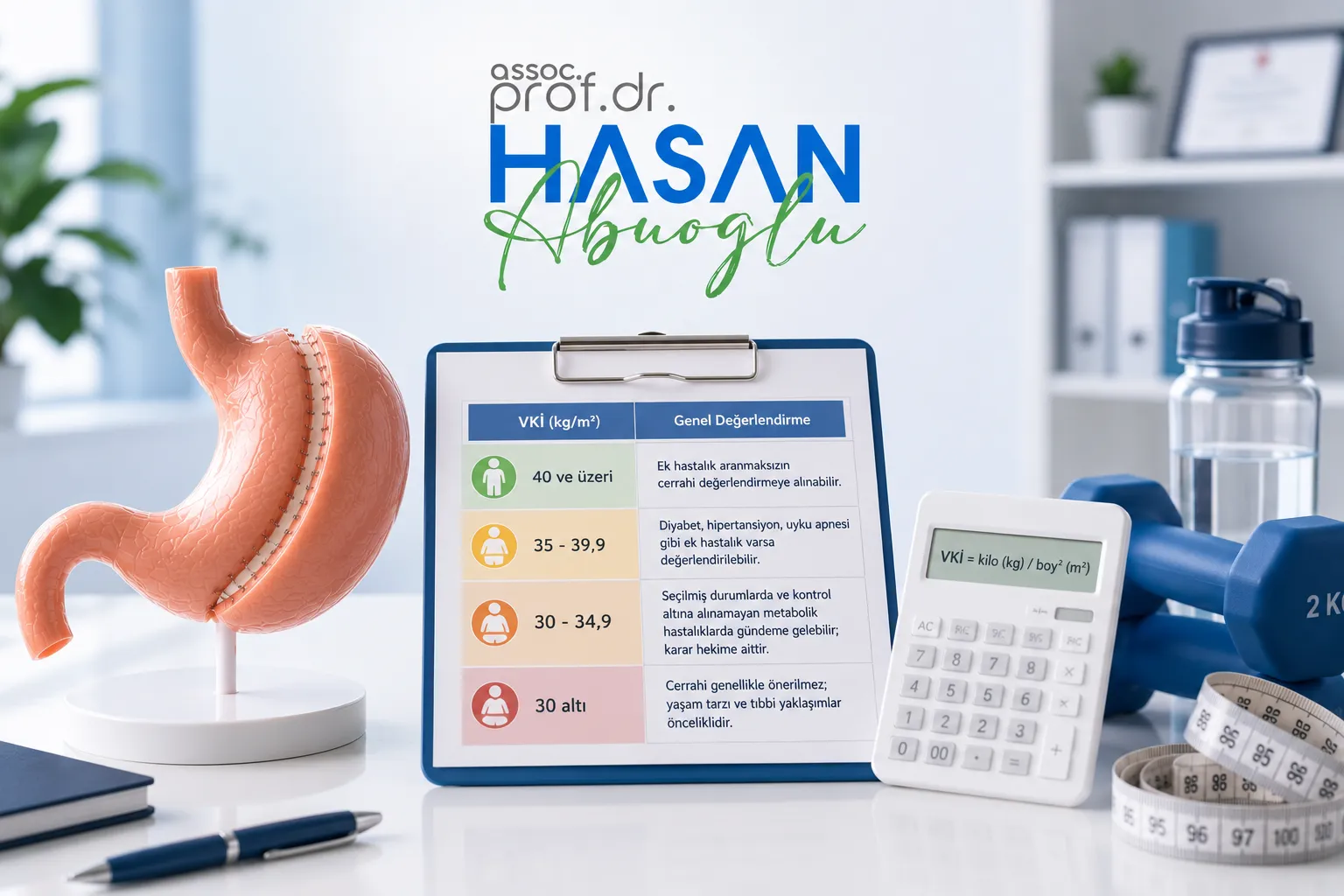
| BMI ≥ 35 kg/m² | Eligible regardless of comorbidities |
| BMI 30-34.9 kg/m² | May be considered when metabolic disease (e.g., type 2 diabetes) is present |
| Asian populations BMI > 27.5 kg/m² | Lower threshold due to genetic and metabolic differences |
Clinical Situations Where Gastric Bypass Is Preferred
Specific clinical situations where gastric bypass is preferred over sleeve gastrectomy:
- Severe gastroesophageal reflux disease (GERD): Sleeve may worsen reflux; RYGB improves it
- Barrett's esophagus
- Long-standing, insulin-dependent type 2 diabetes: Gastric bypass has more pronounced metabolic effect
- Very high BMI (>50): OAGB or RYGB may be preferred
- Insufficient weight loss or weight regain after sleeve gastrectomy: Gastric bypass as a revision procedure
- Hiatal hernia present
- Familial hyperlipidemia: Reduced absorption may be beneficial
Age Range
Current ASMBS/IFSO guidelines cover, after appropriate evaluation:
- 18-65 years: Standard indication
- Over 65 years: Individual evaluation, may be considered
- Under 18 years (adolescents): Considered after multidisciplinary team evaluation in suitable cases
Who is Not a Candidate?
Absolute Contraindications
- Untreated severe psychiatric disorders (psychosis, uncontrolled bipolar disorder)
- Active substance abuse (alcohol, drugs)
- Inability to comply with postoperative follow-up and lifestyle changes
- Inability to commit to lifelong vitamin/mineral supplementation
- Uncontrolled cardiopulmonary disease creating prohibitive surgical risk
Relative Contraindications
- Crohn's disease or inflammatory bowel disease (due to intestinal restructuring)
- Previous extensive bowel resection
- Specific vitamin/mineral metabolism disorders
- Mandatory long-term NSAID (non-steroidal anti-inflammatory) use
- Pregnancy or imminent pregnancy plan (waiting period of at least 18-24 months recommended)
- Severe osteoporosis (due to reduced calcium absorption)
Clinical evaluation is essential: The lists above provide general guidance. Determining individual eligibility is only possible after detailed medical evaluation, multidisciplinary team review, and necessary investigations.
How is the Surgery Performed?
Gastric bypass is now performed almost exclusively using a laparoscopic (minimally invasive) approach. Open surgery is rarely used today, except in specific circumstances.
RYGB Surgical Steps
1. General anesthesia is administered.
2. Trocar placement: 5-6 small incisions (each 0.5-1.2 cm) are made in the abdomen.
3. Pneumoperitoneum: The abdominal cavity is insufflated with carbon dioxide.
4. Creating the gastric pouch: A small 30-50 ml pouch is created in the upper stomach. The stomach is divided with a stapler, and the small upper pouch is separated from the main stomach.
5. Bowel measurement: The small intestine is measured from the ligament of Treitz. Typically, 50-75 cm is allotted to the biliopancreatic limb and 100-150 cm to the Roux limb.
6. Jejunum division: The jejunum is divided at a specific point to create the Roux limb.
7. Gastrojejunostomy: The end of the Roux limb is connected to the small gastric pouch (first anastomosis). Stapler or hand-sewn techniques may be used.
8. Jejunojejunostomy: The biliopancreatic limb is connected to the Roux limb at a more distal point (second anastomosis, the bottom of the "Y").
9. Leak testing: Anastomotic lines are checked using methylene blue or intraoperative endoscopy.
10. Closure of internal hernia spaces: Mesenteric defects (Petersen's space, jejunojejunostomy defect) are closed.
11. Drains and closure: Drains are placed if necessary, trocars are removed, and incisions are closed.
OAGB Surgical Steps (Differences from RYGB)
OAGB has a simpler structure:
- The gastric pouch is longer and tubular (approximately 10-15 cm)
- The bypassed portion of the intestine is connected directly to this gastric pouch (single anastomosis)
- The biliopancreatic limb length is 150-200 cm
- No "Y" shape, only a single loop anastomosis
Surgical Technologies
- Laparoscopic cameras (HD or 4K imaging systems)
- Tissue sealing/cutting devices (LigaSure, Harmonic, Thunderbeat)
- Linear surgical staplers (Echelon, Endo GIA, Signia)
- Circular staplers (especially for gastrojejunostomy in some RYGB techniques)
- Staple line reinforcement materials (when indicated)
- Robotic surgery (in centers with appropriate equipment and indication)
Surgery Duration and Hospital Stay
Surgical Duration
| Method | Average duration |
|---|---|
| RYGB | 90-150 minutes |
| OAGB-MGB | 80-120 minutes |
| D-OAGB | 100-130 minutes |
Duration varies based on the patient's anatomical features, BMI, prior surgeries, and the need for additional procedures (e.g., hiatal hernia repair).
Hospital Stay
Typical hospital stay following gastric bypass is 3-4 days:
| Day | Process |
|---|---|
| Day of surgery | Postoperative recovery, observation, pain control, sips of water (with surgeon's approval) |
| Day 1 | Liquid diet initiation, leak test (if indicated), early ambulation |
| Day 2 | Test results review, drain assessment, gradual diet progression |
| Day 3-4 | Most patients are discharged |
Hospital stay duration may vary based on the patient's recovery rate, return of bowel function, and pain control. Generally 1 day longer than sleeve gastrectomy stay.
Preoperative Preparation
The preoperative process is critically important for successful surgery and rapid recovery.
Medical Evaluation
The following workup is standard:
Blood tests:
- Complete blood count, biochemistry, coagulation panel
- HbA1c, fasting glucose, insulin (diabetes screening)
- Thyroid function (TSH, fT4)
- Vitamin B12, vitamin D, folate, iron, ferritin
- Lipid panel
- Liver function tests
Imaging:
- Upper gastrointestinal endoscopy (gastroscopy)
- Abdominal ultrasonography (gallstone screening)
- Chest X-ray
- ECG, echocardiography (if indicated)
- Specialized imaging if hiatal hernia is suspected
Consultations:
- Anesthesiology
- Endocrinology (if diabetes/thyroid disease)
- Cardiology (if cardiac disease or advanced age)
- Pulmonology (if sleep apnea suspected)
- Psychiatry/psychology (recommended for every patient)
- Dietitian evaluation
Preoperative Diet
Most centers recommend a 2-4 week liver-shrinking diet before surgery:
- Low-calorie, low-carbohydrate
- High-protein
- Liquid-predominant (especially the final week)
- Complete cessation of alcohol consumption
- Smoking cessation when possible (at least 4 weeks prior)
This diet helps reduce liver size during surgery, improving surgical visualization and reducing complication risk.
Day of Surgery
- Fasting for the last 8 hours
- Regular medications taken or held per anesthesiologist's recommendation
- Removal of nail polish, jewelry, contact lenses
- Blood thinners (aspirin, warfarin, etc.) discontinued at the appropriate timeframe
Postoperative Process
Initial Hospital Days
Within the first 24-48 hours after surgery:
- IV fluid and medication support
- Pain control
- Early ambulation (out of bed) is critical — reduces clot formation risk
- Leak testing (if indicated)
- Gradual transition to oral liquid intake
Nutrition Phases
Postoperative nutrition follows a 5-phase progression:
| Phase | Duration | Content |
|---|---|---|
| Phase 1 | First 1-2 days | Water and warm clear fluids only |
| Phase 2 | Weeks 1-2 | Clear liquids (broths, vegetable broth, sugar-free tea) |
| Phase 3 | Weeks 3-4 | Pureed/semi-liquid soft foods |
| Phase 4 | Weeks 5-6 | Soft solid foods (eggs, fish, cheese) |
| Phase 5 | From weeks 6-8 onward | Normal-textured foods (small portions) |
Unlike sleeve gastrectomy, avoiding sugar-rich foods is critical after gastric bypass — they can trigger dumping syndrome.
Activity and Exercise
| Period | Recommended activity |
|---|---|
| First week | Light walking (2-3 times daily, 5-10 minutes) |
| Week 2 | Longer walks, normal household activities |
| Weeks 3-4 | Cycling, light cardio, treadmill walking |
| From weeks 6-8 | With medical clearance: weights, yoga, swimming |
Note: Exercises that strain the abdominal area (e.g., sit-ups, heavy weightlifting, contact sports) should be deferred for at least 8 weeks.
Lifelong Vitamin and Mineral Supplementation
Vitamin/mineral supplementation after gastric bypass is far more critical than after sleeve gastrectomy because absorption is also reduced:
- Vitamin B12 (oral, sublingual, or injection — assessed yearly)
- Vitamin D (high-dose, annual follow-up)
- Iron (especially in menstruating women)
- Calcium citrate (not calcium carbonate — because acid is needed for absorption)
- Multivitamin complex
- Folate
- Fat-soluble vitamins (A, D, E, K) — especially after OAGB
Periodic blood tests (at 3, 6, 12 months and annually thereafter) must be conducted to monitor vitamin/mineral levels.
Possible Outcomes and Expectations
Weight Loss
Expected weight loss following gastric bypass, as reported in international literature:
| Time period | RYGB (% EWL) | OAGB-MGB (% EWL) |
|---|---|---|
| 6 months | 50-60% | 55-65% |
| 12 months | 65-75% | 65-80% |
| 18-24 months | 70-80% (peak) | 70-85% (peak) |
| 5 years | 55-70% | 55-70% |
Excess Weight = Current weight - Ideal weight
Salminen P. et al. JAMA Surgery 2022 — 10-year data: Comparing sleeve gastrectomy and RYGB, similar long-term weight loss sustainability was demonstrated for both methods at 10 years.
Important — Individual variability: The percentages above represent average outcomes from large cohort studies. Individual results vary based on starting BMI, lifestyle adherence, comorbidities, genetic predisposition, and adherence to postoperative follow-up.
Improvement in Comorbidities
Gastric bypass stands out as a metabolic surgery — particularly with significant impact on type 2 diabetes. Reported improvement rates in long-term international studies:
- Type 2 diabetes: Approximately 75-85% remission (higher than sleeve)
- Hypertension: Approximately 65-75% improvement or reduced medication needs
- Hyperlipidemia: Approximately 70% improvement
- GERD/reflux disease: 75-90% improvement after RYGB
- Sleep apnea: Approximately 75-85% significant improvement
- Fatty liver disease: Significant regression
These rates summarize international literature; individual outcomes may vary.
The Importance of Lifestyle Change
Long-term success with gastric bypass requires integration with lifestyle change. Without disciplined vitamin/mineral supplementation, healthy eating habits, regular exercise, and psychological support, sustaining long-term success becomes difficult.
The surgery should be regarded as a starting point.
Risks and Possible Complications
As with any surgical procedure, gastric bypass carries potential risks. With modern laparoscopic technique and experienced teams, these risks are quite low, but not zero.
Early (Within 30 Days) Risks
- Anastomotic leak (approximately 1-2%)
- Bleeding (approximately 1-3%)
- Deep vein thrombosis / pulmonary embolism (low, minimized with prophylaxis)
- Wound infection (rare)
- Anesthesia-related complications
- Pulmonary infections (atelectasis, pneumonia)
Late Risks
- Dumping syndrome (especially after sugary foods — more common with RYGB)
- Marginal ulcer (at anastomotic site, 3-6%)
- Anastomotic stenosis — RYGB 14.7%, OAGB 1.9%
- Internal hernia (long-term, specific to RYGB)
- Vitamin/mineral deficiencies (B12, iron, calcium, D — requires continuous monitoring)
- Hair loss (usually months 3-6, temporary)
- Gallstone formation (related to rapid weight loss)
- Bile reflux (especially with OAGB)
- Weight regain (closely related to lifestyle adherence)
Risk Management
Detailed preoperative evaluation, an experienced surgical team, modern technology, close postoperative follow-up, discipline in vitamin supplementation, and patient compliance significantly reduce complication risks.
Comparison with Sleeve Gastrectomy
The two most common bariatric surgeries — sleeve gastrectomy and gastric bypass — compared:
| Feature | Sleeve Gastrectomy (LSG) | Gastric Bypass (RYGB) | Mini Bypass (OAGB) |
|---|---|---|---|
| Approach | Restrictive + hormonal | Restrictive + malabsorptive + hormonal | Restrictive + malabsorptive + hormonal |
| Surgery duration | 60-90 min | 90-150 min | 80-120 min |
| Hospital stay | 2-3 days | 3-4 days | 2-3 days |
| Anatomical complexity | Low | High (2 anastomoses) | Medium (1 anastomosis) |
| Reversibility | Not reversible | Not easily reversible | Relatively reversible |
| Effect on reflux | May worsen in some cases | Improves | May worsen sometimes |
| Type 2 diabetes effect | Significant (~60-70% remission) | More pronounced (~75-85%) | More pronounced (~75-85%) |
| Vitamin absorption | Less affected | Significantly reduced | More reduced |
| Dumping syndrome | Very rare | May occur | Less common |
| Long-term (10+ year) data | Strong | Very strong | Sufficiently strong |
| Internal hernia risk | None | Present | None |
There is no universally "best procedure." The most appropriate option for each patient is determined through individualized evaluation. BMI, comorbidities, reflux history, age, sex, ability to commit to vitamin supplementation, and patient preference are all considered.
Frequently Asked Questions
Is gastric bypass reversible?
RYGB is technically reversible but the procedure is very complex. OAGB, due to its structure, is comparatively easier to reverse or convert to another bypass. Reversal is rare in clinical practice.
What is dumping syndrome?
Dumping syndrome occurs especially after sugary and high-carbohydrate foods, presenting as sudden palpitations, sweating, nausea, dizziness, and weakness. It typically begins 30-60 minutes after eating. Avoiding sugary foods is the best preventive measure.
How long does the postoperative pain last?
Significant pain after laparoscopic surgery typically lasts the first 3-4 days and is controlled with pain medication. Pain decreases markedly after weeks 1-2.
When can I return to work?
Office workers can usually return after 3-4 weeks, while those in physically demanding jobs may require 6-8 weeks. The exact timing is determined based on medical evaluation. Generally 1-2 weeks longer recovery than sleeve gastrectomy.
When can I become pregnant?
Due to the rapid weight loss period and vitamin/mineral changes, at least 18-24 months of waiting is recommended. Reliable contraception is important during this period. Pregnancy plans should be coordinated with multidisciplinary follow-up.
Will I experience hair loss?
Temporary hair loss may occur between months 3-6 due to rapid weight loss and protein/vitamin deficiency. It typically resolves on its own within 6-9 months. Adequate protein intake, B12, and iron supplementation can minimize this.
Do I need to take vitamin supplements for life?
Yes. Because absorption is reduced after gastric bypass, lifelong vitamin and mineral supplementation is required. This discipline is one of the most important factors for surgical success. Periodic blood tests assess the situation.
Will I regain weight?
Maximum weight loss occurs in the first 18-24 months. In subsequent years, some weight regain (averaging 10-15%) may occur. Lifestyle adherence, nutrition, and exercise habits are decisive factors. The regain rate is generally lower than after sleeve gastrectomy.
Is gastric bypass covered by insurance?
Coverage varies by individual insurance policy and country. Patients are encouraged to consult their insurance provider for specific information.
How long does the procedure take?
Operative time averages 90-150 minutes for RYGB and 80-120 minutes for OAGB; total time including OR entry, anesthesia, recovery, and observation can extend to 3-4 hours.
Conclusion
Gastric bypass is one of the most thoroughly researched and evidence-based modern bariatric surgical procedures — particularly notable for its metabolic effect, reflux improvement, and long-term weight loss sustainability. Appropriate indication, an experienced team, modern technology, the patient's commitment to lifestyle change, and disciplined vitamin/mineral supplementation form the foundations of successful outcomes.
The choice of gastric bypass method (RYGB, OAGB, or D-OAGB) is determined based on the patient's individual situation, comorbidities, reflux history, BMI value, and the surgical team's experience.
The surgery should be regarded as a starting point. Long-term success comes from healthy eating habits, regular exercise, lifelong vitamin/mineral supplementation, and consistent medical follow-up.
For detailed information and individualized evaluation, consultation with a general surgeon experienced in bariatric and metabolic surgery is recommended.
⚠️ Important Notice (in accordance with Turkish Healthcare Promotion Regulation, Official Gazette No. 33075, Article 7/k): Outcomes of any surgical or interventional procedure may vary from person to person. Patients are advised to obtain detailed consultation from their physician before undergoing any procedure.
References
-
Eisenberg D, Shikora SA, Aarts E, et al. 2022 American Society of Metabolic and Bariatric Surgery (ASMBS) and International Federation for the Surgery of Obesity and Metabolic Disorders (IFSO) Indications for Metabolic and Bariatric Surgery. Surg Obes Relat Dis. 2022;18(12):1345-1356. DOI: 10.1016/j.soard.2022.08.013 PMC9834364
-
Salminen P, Grönroos S, Helmiö M, et al. Effect of Laparoscopic Sleeve Gastrectomy vs Roux-en-Y Gastric Bypass on Weight Loss, Comorbidities, and Reflux at 10 Years in Adult Patients With Obesity. JAMA Surg. 2022;157(8):656-666.
-
Primary and Revisional One Anastomosis Gastric Bypass: A Systematic Review and GRADE-Based IFSO Position Statement. Obes Surg. 2025. DOI: 10.1007/s11695-025-08278-6
-
Onzi TR, et al. Efficacy and safety of one anastomosis gastric bypass in surgical treatment of obesity: systematic review and meta-analysis of randomized controlled trials. ABCD Arquivos Brasileiros de Cirurgia Digestiva. 2024;37:e1814.
-
El Masry MAM, et al. Comparative study of midterm outcomes between Roux-en-Y gastric bypass (RYGB), diverted one-anastomosis gastric bypass (D-OAGB), and one anastomosis gastric bypass (OAGB). Langenbecks Arch Surg. 2024. PMC11550272
-
One Anastomosis Gastric Bypass-Mini-Gastric Bypass (OAGB-MGB) Versus Roux-en-Y Gastric Bypass (RYGB)-a Mid-Term Cohort Study with 612 Patients. Obes Surg. 2019. DOI: 10.1007/s11695-019-04250-3
-
Healthcare Advertising and Information Activities Regulation. Turkish Official Gazette, November 12, 2025, No. 33075.
Author and Medical Reviewer: Assoc. Prof. Dr. Hasan Abuoğlu — Associate Professor of General Surgery
Health Tourism Authorization Number: ST-2697 (Republic of Türkiye, Ministry of Health)
Published: May 15, 2026 Last updated: May 15, 2026 Editorial contact: contact@drhasanabuoglu.com
This content is for informational purposes only and does not substitute for medical advice, diagnosis, or treatment. Always consult a qualified healthcare provider for medical decisions.