This article was reviewed on June 1, 2026 by Assoc. Prof. Dr. Hasan Abuoğlu, Associate Professor of General Surgery, in accordance with international endoscopy society guidelines (ESGE, ASGE) and current peer-reviewed literature.
Surgery is not always the first choice in obesity treatment. For individuals who are not yet candidates for bariatric surgery, or who prefer a less invasive approach, the gastric balloon (intragastric balloon) is a temporary, reversible, and non-surgical alternative. This guide comprehensively addresses what the gastric balloon is, what types exist, how it is applied, who is suitable for it, and how it compares to bariatric surgical procedures.
What is a Gastric Balloon?
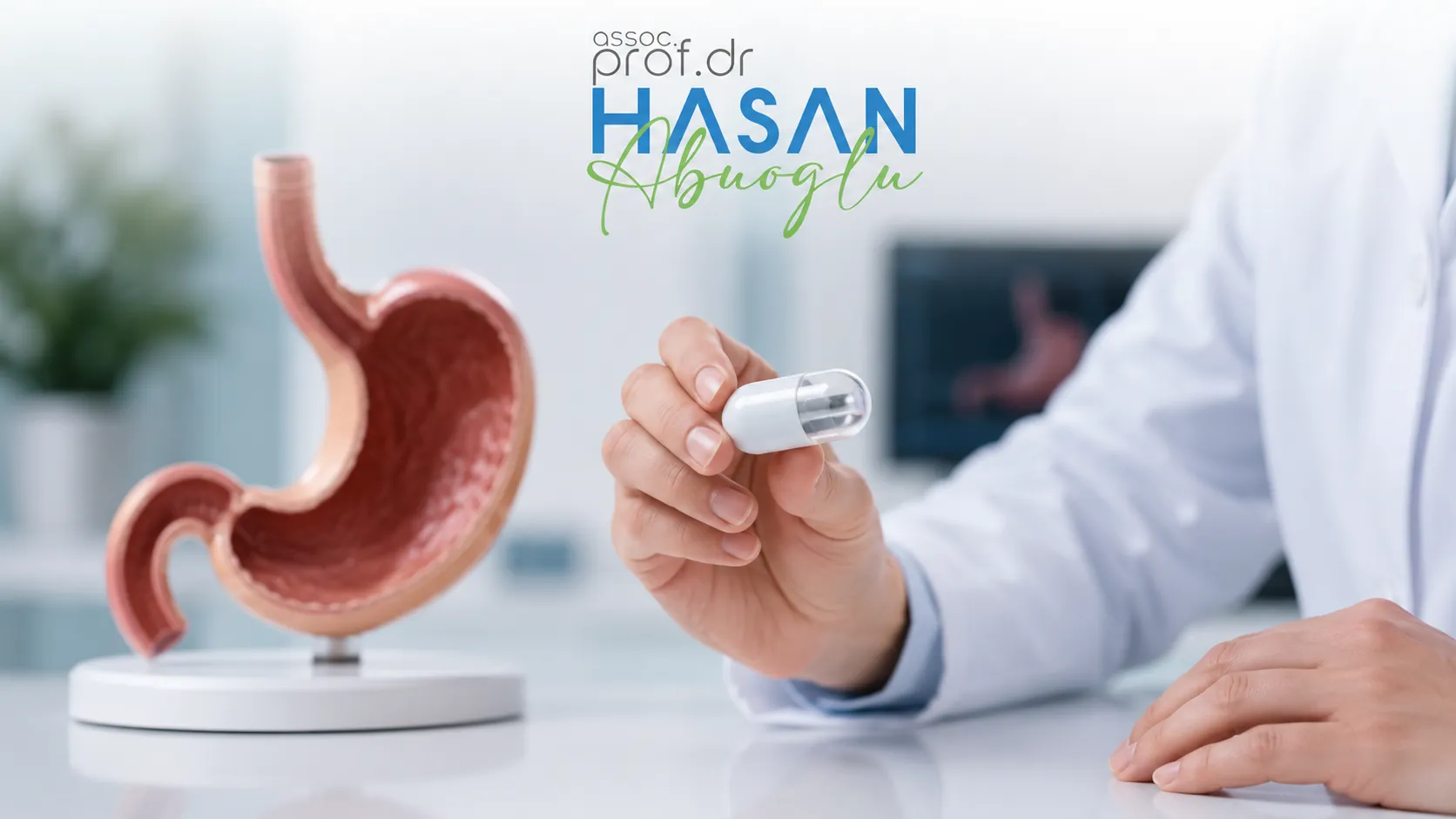
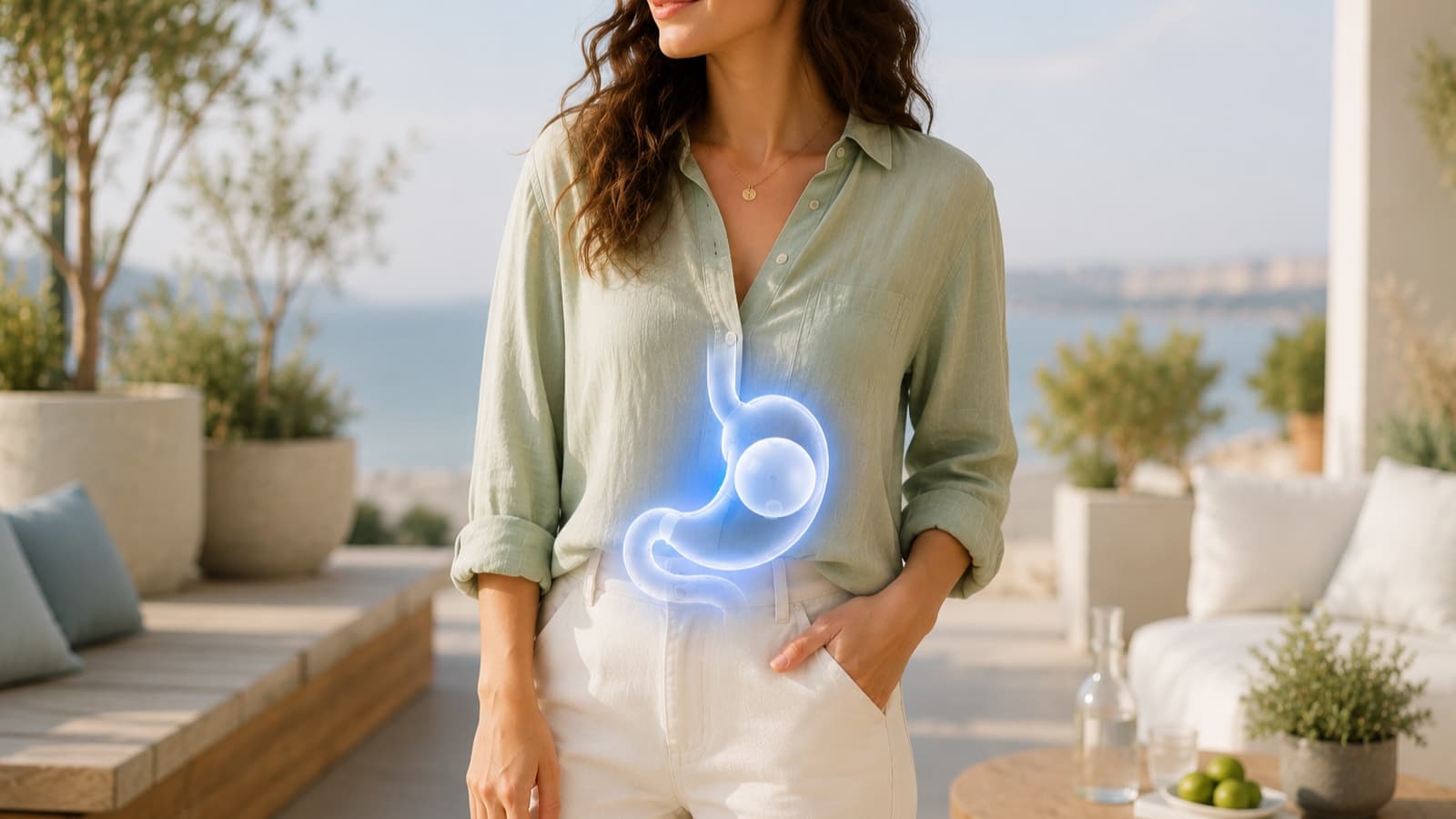
The gastric balloon (medical term: intragastric balloon — IGB) is a balloon made from silicone or similar biocompatible material placed inside the stomach. Filled with liquid (usually saline) or gas, it occupies space in the stomach, allowing the patient to feel satiated with smaller food intake.
Key Information
| Aspect | Detail |
|---|---|
| Medical name | Intragastric balloon (IGB) |
| Approach | Non-surgical, restrictive |
| Placement | Endoscopic or swallowable |
| Procedure duration | 15-30 minutes |
| Dwell time | 4-12 months (depending on balloon type) |
| Anesthesia | Light sedation or short anesthesia |
| Hospital stay | Typically same-day discharge |
| Reversibility | Fully reversible |
Historical Context
The first gastric balloon was approved by the FDA in 1985, but was withdrawn shortly afterward due to high complication rates. Modern silicone balloons received the CE mark in Europe in 1991 (Orbera/BIB) and FDA approval in 2015. Recent years have brought new generations: swallowable balloons (Allurion Elipse), adjustable balloons (Spatz3), and gas-filled balloons (Obalon).
How Does It Work?
The gastric balloon works through three primary mechanisms:
1. Mechanical Space Occupation (Volume Effect)
The balloon occupies a significant portion of the stomach volume (typically 400-700 ml). This reduces the available space for food and the patient feels satiated with much smaller portions.
2. Delayed Gastric Emptying
The presence of the balloon in the stomach prolongs gastric emptying time. Foods stay in the stomach longer, and the patient experiences extended satiety.
3. Behavioral Reprogramming
The 4-12 month balloon period helps the patient develop new habits: smaller portions, slower eating, separation of liquid and solid food. These behavioral changes contribute to weight maintenance after balloon removal.
Important: The gastric balloon is not a standalone treatment. It is effective when combined with a nutrition plan, behavioral therapy, and exercise. Expecting lasting results from balloon placement alone, without lifestyle change, is unrealistic.
Types of Gastric Balloons
Several intragastric balloon types are used worldwide. The most common are:
1. Orbera (Apollo Endosurgery)
The most studied and widely used gastric balloon.
| Aspect | Detail |
|---|---|
| Placement | Endoscopic |
| Filling | Liquid (saline) — 400-700 ml |
| Dwell time | 6 months (Orbera365 model: 12 months) |
| Approval | CE (1991, Europe), FDA (2015, USA) |
| Removal | Endoscopic |
Clinical data: A meta-analysis of 17 studies including 1,683 patients reported mean Excess Weight Loss (EWL) of 25.44% at 12 months (95% CI: 21.47%-29.41%). Pooled 6-month total body weight loss (TBWL) is 13.16%.
2. Spatz3 Adjustable Balloon System (Spatz Medical)
The only balloon whose volume can be adjusted after placement.
| Aspect | Detail |
|---|---|
| Placement | Endoscopic |
| Filling | Liquid — 400-800 ml (adjustable) |
| Dwell time | 12 months |
| Advantage | Volume can be reduced if patient cannot tolerate, increased if weight loss is insufficient |
| Approval | CE (Europe); FDA approval pending in the USA |
Clinical data: A 12-month pilot study with 18 patients reported mean EWL of 48.8%. Adjustability allows treatment continuity in patients with intolerance.
3. Allurion Elipse (Allurion Technologies)
The only balloon that requires no endoscopy for placement and is naturally excreted when its dwell time ends.
| Aspect | Detail |
|---|---|
| Placement | Swallowable capsule (no endoscopy required) |
| Filling | Liquid — approximately 550 ml |
| Dwell time | Approximately 16 weeks (4 months) |
| Removal | Automatic (self-emptying valve releases the balloon, which passes naturally) |
| Approval | CE (Europe); ENLIGHTEN/AUDACITY trials ongoing in USA |
Clinical data: Total body weight loss (TBWL) of 20.1% and EWL of 45.8% have been reported. Avoiding any endoscopic procedure is its primary advantage.
4. Obalon Balloon System
A swallowable, gas-filled (nitrogen) balloon system, available in 1, 2, or 3 balloon configurations.
| Aspect | Detail |
|---|---|
| Placement | Swallowable capsules |
| Filling | Gas (nitrogen) |
| Dwell time | 6 months |
| Removal | Endoscopic (mandatory) |
| Approval | FDA (2016, USA) |
Clinical data: Sullivan et al. 2018 multi-center randomized sham-controlled trial (n=387) showed 6-month TBWL of 7.1% in the Obalon + lifestyle group vs 3.6% in the control group.
5. ReShape Duo (Apollo Endosurgery)
A dual balloon system with two connected balloons.
| Aspect | Detail |
|---|---|
| Placement | Endoscopic |
| Filling | Liquid (methylene blue mixed) — 900 ml total (450+450) |
| Dwell time | 6 months |
| Advantage | Dual balloon design reduces deflation-related complications |
| Approval | FDA (2015, USA) |
Liquid-Filled vs. Gas-Filled Balloons
The 2021 AGA (American Gastroenterological Association) Technical Review concluded:
- Liquid-filled balloons provide approximately 2.80% more weight loss compared to gas-filled balloons
- SUCRA analysis suggests 93.9% probability of superiority for liquid-filled vs 54.6% for gas-filled
Comparison of Balloon Types
| Balloon | Placement | Filling | Dwell | Removal |
|---|---|---|---|---|
| Orbera | Endoscopic | Liquid (400-700 ml) | 6 months | Endoscopic |
| Orbera365 | Endoscopic | Liquid (400-700 ml) | 12 months | Endoscopic |
| Spatz3 | Endoscopic | Liquid (400-800 ml) — adjustable | 12 months | Endoscopic |
| Allurion Elipse | Swallowable | Liquid (~550 ml) | 4 months | Naturally passed |
| Obalon | Swallowable | Gas (nitrogen) | 6 months | Endoscopic |
| ReShape Duo | Endoscopic | Liquid (900 ml) — dual balloon | 6 months | Endoscopic |
Who is a Candidate?
The gastric balloon may be considered for the following individuals:
Primary Indications
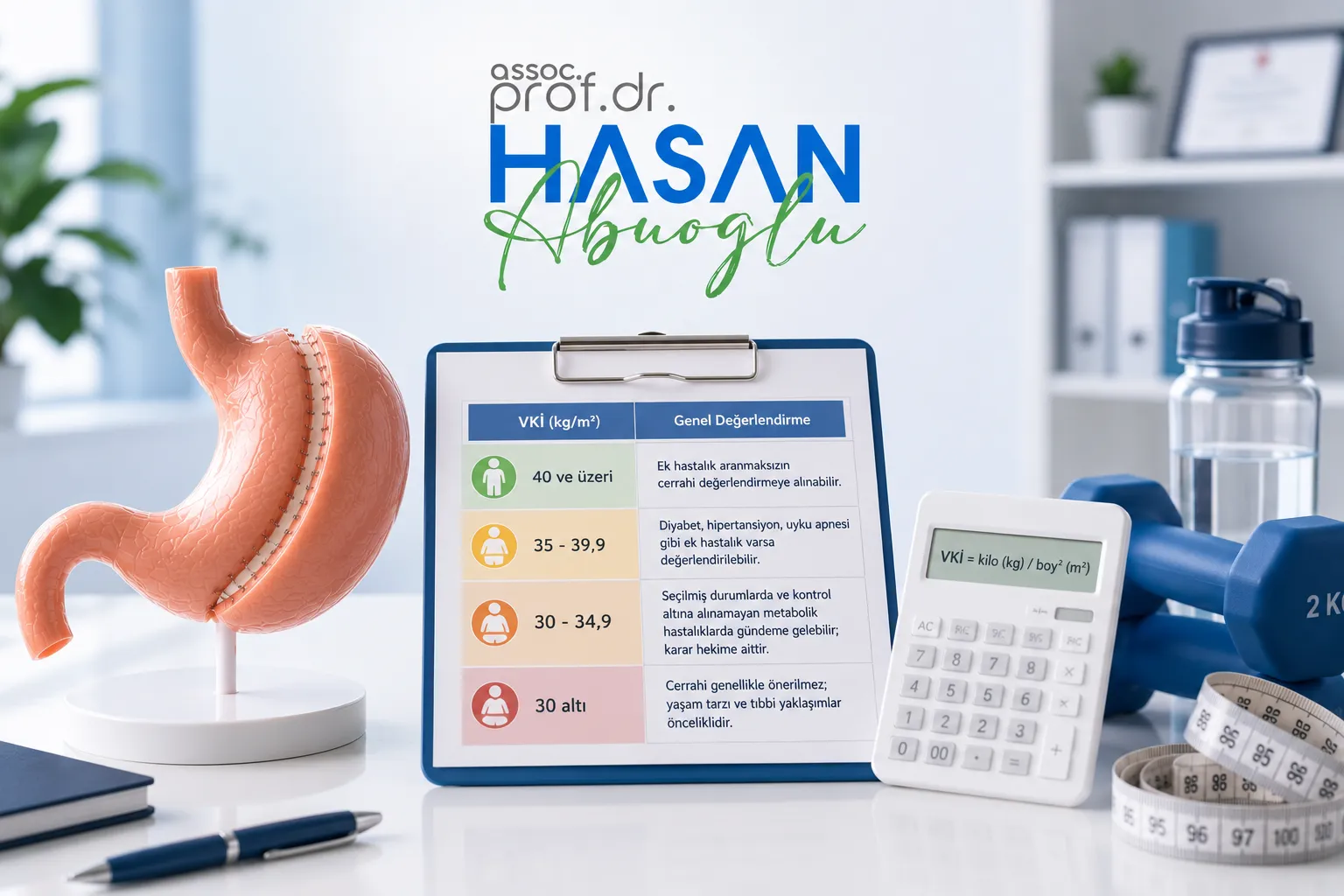
- Adults with BMI 27-35 kg/m² who have not achieved sufficient weight loss with lifestyle modifications
- Individuals with BMI under 30 kg/m² with obesity-related comorbidities (type 2 diabetes, hypertension, etc.)
- Patients who are not surgical candidates or who prefer a non-surgical approach
- Pre-bariatric surgery weight loss (e.g., super-obese patients)
Secondary Indications
- Testing the patient's lifestyle change capacity before surgery
- Reducing surgical/anesthesia risk in high-BMI patients (preoperative balloon)
- Time-limited weight loss goals (e.g., wedding, important event)
BMI Calculation
Formula
BMI = Weight (kg) / [Height (m) × Height (m)]
Example: A person weighing 80 kg and 1.68 m tall has a BMI of:
Formula
BMI = 80 / (1.68 × 1.68) = 80 / 2.82 = 28.4 kg/m²
Important: The gastric balloon is not a sufficient standalone treatment for morbid obesity (BMI > 40). Surgical options should be evaluated for these patients. The balloon may only be considered as a preoperative or supportive measure.
Who is Not a Candidate?
The gastric balloon is contraindicated in the following conditions:
Absolute Contraindications
- Previous gastric surgery (especially bariatric surgery)
- Active peptic ulcer disease
- Severe gastroesophageal reflux disease (GERD)
- Large hiatal hernia
- Esophageal varices
- Inflammatory bowel disease (Crohn's, ulcerative colitis)
- Chronic anticoagulation therapy
- Pregnancy and breastfeeding
- Active substance abuse
- Untreated severe psychiatric disease
- Latex or silicone allergy (depending on balloon material)
Relative Contraindications
- Uncontrolled type 2 diabetes
- History of extensive abdominal surgery
- Helicobacter pylori infection (must be treated first)
- Inability to attend regular follow-up
Clinical evaluation is essential: The lists above provide general guidance. Determining individual eligibility is only possible after detailed medical evaluation including upper gastrointestinal endoscopy.
How is the Gastric Balloon Placed?
Endoscopic Balloon Placement (Orbera, Spatz3, Obalon, ReShape Duo)
1. Preparation: The patient is positioned, IV access is established.
2. Sedation: Light sedation or short general anesthesia is administered (per anesthesiologist's evaluation).
3. Diagnostic endoscopy: A gastroscope is passed through the esophagus into the stomach. The stomach and duodenum are inspected for any contraindications (ulcer, hernia, etc.).
4. Balloon placement:
- Orbera, Spatz3, ReShape Duo: A deflated balloon is placed endoscopically and inflated with saline through a catheter
- Obalon: With patient awake, swallowable capsule is taken; the capsule dissolves in the stomach; balloon is inflated with gas via attached catheter; the catheter is then withdrawn
5. Position verification: The balloon is positioned in the appropriate area of the stomach, leakage check is performed.
6. Endoscope withdrawal: The procedure is completed; the patient is moved to the recovery area.
Swallowable Balloon Placement (Allurion Elipse)
1. Capsule swallowing: The patient swallows a special capsule under physician supervision, with no endoscopy required. The capsule contains the deflated balloon and a thin attached catheter.
2. Inflation: Once positioning in the stomach is confirmed, the balloon is inflated with saline through the catheter.
3. Catheter removal: After inflation, the catheter is gently withdrawn; the balloon remains free in the stomach.
4. Week 16: The self-deflating valve built into the balloon activates; the balloon empties and is naturally passed through the gastrointestinal tract.
Technologies Used
- High-resolution endoscopy systems (HD or 4K)
- Sedation and anesthesia monitoring
- Sterile silicone balloon (FDA/CE approved)
- Injection catheters
- Methylene blue for leak testing (when needed)
Procedure Time and Recovery
Procedure Time
| Phase | Duration |
|---|---|
| Preparation and sedation | 15-20 minutes |
| Placement procedure | 15-30 minutes |
| Observation | 1-2 hours |
| Total time at facility | 2-4 hours |
The gastric balloon is typically performed as an outpatient (ambulatory) procedure; most patients are discharged the same day.
Recovery Period
| Period | Process |
|---|---|
| First 3-7 days | Most challenging period — nausea, vomiting, stomach cramps possible; clear liquids only |
| Weeks 1-2 | Symptoms decrease; transition to semi-liquid diet |
| After week 2 | Most patients return to normal activities; soft solid food introduced |
| Weeks 4-6 | Full adaptation; period of fastest weight loss begins |
First week warning: Nausea and vomiting are very common (reported in 70-90% of patients). Usually resolves within 5-7 days. Severe and persistent vomiting requires immediate physician contact.
Pre-Procedure Preparation
Medical Evaluation
Blood tests:
- Complete blood count, biochemistry
- HbA1c (diabetes screening)
- Thyroid function (TSH, fT4)
- Vitamin B12, vitamin D, iron, ferritin
- Lipid panel
Imaging and tests:
- Upper gastrointestinal endoscopy (gastroscopy) — MANDATORY
- Helicobacter pylori screening
- Abdominal ultrasonography (if needed)
- Chest X-ray, ECG (over age 50)
Consultations:
- Anesthesiology
- Endocrinology (if type 2 diabetes or thyroid disease present)
- Dietitian (mandatory — for long-term follow-up)
- Psychologist/psychiatry (when needed)
Pre-Procedure Diet
- Low-calorie diet 1-2 weeks before the procedure
- Last 24 hours: liquid diet only
- Last 8-12 hours: complete fasting
- Cessation of alcohol consumption at least 1 week before
- Anticoagulants discontinued at appropriate timeframe
Day of Procedure
- Arrive on empty stomach
- Regular medications taken per anesthesiologist's recommendation
- A companion to take the patient home is mandatory (due to sedation)
- Remove nail polish and jewelry
Post-Procedure Process
Medication Therapy
The following medications are typically prescribed after the procedure:
- Proton pump inhibitors (PPI) — throughout balloon dwell period (gastric acid protection)
- Antiemetics (anti-nausea) — first 5-7 days
- Antispasmodics — as needed for stomach cramps
Nutrition Phases
| Phase | Duration | Content |
|---|---|---|
| Phase 1 | First 2-3 days | Clear liquids (water, tea, broth without particles) |
| Phase 2 | Days 4-7 | Semi-liquids (yogurt, pureed soups, smoothies) |
| Phase 3 | Weeks 1-2 | Soft foods (eggs, fish, cottage cheese, pureed vegetables) |
| Phase 4 | After week 2 | Normal-textured foods (small portions, slow eating) |
Nutrition Principles
- Small portions: 200-300 ml volume per meal
- Slow eating: Chew each bite for at least 20 seconds
- Liquid-solid separation: No drinking with meals; hydrate 30 min before/after
- High protein: At least 60-80 g protein per day
- Adequate hydration: 1.5-2 L water per day (between meals)
- Avoid sugar and carbonated drinks
- No late-night eating (reflux risk)
Activity and Exercise
| Period | Recommended activity |
|---|---|
| First week | Light walking |
| Weeks 2-4 | Regular walking, yoga, light exercise |
| After 1 month | Cycling, swimming, strength training (gradually) |
Regular Follow-Up
- Mandatory check-ups at month 1, 3, 6 (and 12 for 12-month balloons)
- Monthly meetings with dietitian
- Periodic blood tests
Expected Outcomes
Weight Loss
Outcomes depending on balloon type and patient adherence:
| Balloon Type | TBWL (Total Body Weight Loss) | EWL (Excess Weight Loss) |
|---|---|---|
| Orbera (6 months) | 11-13% | 25-30% |
| Spatz3 (12 months) | 14-19% | 42-48% |
| Allurion Elipse (4 months) | 13-15% | 29-33% |
| Obalon (6 months) | 6-7% | 15-18% |
| ReShape Duo (6 months) | 7-8% | 18-22% |
Important Realities
Warning: Weight regain after balloon removal is common. Studies report 30-50% weight regain within 1 year after removal. Therefore, lifestyle change during the balloon period is critically important.
Effect on Comorbidities
Improvement in obesity-related conditions during balloon therapy:
- Type 2 diabetes: Average HbA1c reduction of 0.5-1%
- Hypertension: Significant reduction in blood pressure
- Fatty liver: Improvement in liver enzymes
- Sleep apnea: Symptom relief
- Joint pain: Significant reduction
These effects generally appear parallel to weight loss; if weight is regained after balloon removal, comorbidities may also recur.
Risks and Possible Complications
While not surgical, the gastric balloon is not without risks.
Common Side Effects (First Week)
- Nausea and vomiting (70-90%)
- Stomach cramps
- Reflux and heartburn
- Temporary fatigue related to weight loss
Most of these symptoms resolve within 5-7 days.
Late Complications
- Gastric ulcer (rare, ~1-2%)
- Balloon migration — balloon can move from stomach to small intestine (rare, < 1%)
- Balloon deflation/leakage — endoscopic removal may be needed
- Bowel obstruction — deflated balloon fragment may lodge in bowel (very rare)
- Pancreatitis (rare)
- Aspiration (gastric content entering airway) — very rare but serious
- Death — very rare; FDA reported several balloon-associated deaths in the USA between 2016-2018 (typically related to aspiration, pancreatitis, or delayed diagnosis)
Reasons for Early Removal
In 5-10% of patients, the balloon may need to be removed early:
- Persistent nausea/vomiting
- Severe abdominal pain
- Balloon deflation
- Patient request
Risk Management
- Detailed pre-procedure evaluation
- Selection of appropriate balloon type
- Strict adherence to balloon dwell duration (Orbera 6 months, Elipse 4 months, etc.)
- Regular follow-up and prompt response to symptoms
- 24/7 physician access in emergencies
Gastric Balloon vs. Sleeve Gastrectomy vs. Gastric Bypass
| Feature | Gastric Balloon | Sleeve Gastrectomy | Gastric Bypass |
|---|---|---|---|
| Approach | Non-surgical | Surgical (permanent) | Surgical (permanent) |
| Method | Endoscopic/swallowable | Laparoscopic | Laparoscopic |
| Procedure time | 15-30 min | 60-90 min | 90-150 min |
| Hospital stay | Same day | 2-3 days | 3-4 days |
| Duration/Reversibility | 4-12 months (temporary) | Not reversible | Technically very difficult to reverse |
| TBWL (1 year) | 10-15% | 25-30% | 30-35% |
| EWL (1 year) | 25-45% | 60-70% | 65-75% |
| Type 2 diabetes effect | Limited | Significant improvement | Very significant improvement |
| Vitamin malabsorption | None | Less | More |
| BMI recommendation | 27-35 | ≥35 (or ≥30 + comorbidity) | ≥35 (or ≥30 + comorbidity) |
| Weight regain after 1 year | 30-50% | 5-15% | 5-15% |
| Risk profile | Low | Moderate | Moderate-High |
Summary: The gastric balloon is a temporary tool for non-surgical weight loss. Compared to surgical methods, it is less invasive, provides less weight loss, and has limited long-term durability. With appropriate candidate selection and lifestyle support, it can be a valuable treatment option.
Frequently Asked Questions
Is the gastric balloon painful?
The placement procedure is painless under sedation. The first 3-7 days of adjustment may include cramps, nausea, and vomiting. These symptoms are managed with medication and usually resolve within a week.
Is the gastric balloon permanent?
No. The gastric balloon is temporary. Dwell time ranges from 4-12 months depending on the balloon type. It must be removed at the end of its dwell period; leaving it longer increases the risk of deflation and complications.
Will I regain weight after removal?
Yes, weight regain is common. Studies have observed 30-50% regain within 1 year. For this reason, changes in eating habits and ongoing exercise during the balloon period are critically important.
Is the Allurion Elipse better because it doesn't require endoscopy?
"Better" is subjective. The Allurion Elipse offers a significant advantage for patients who want to avoid endoscopy. However, dwell time is shorter (4 months vs 6-12 months) and volume is fixed (not adjustable). Each patient's situation determines the optimal balloon choice.
Is the gastric balloon covered by insurance?
Insurance coverage varies by country and individual policy. Patients should consult their insurance provider for specific information.
How many days off work do I need?
Most patients can return to office work within 3-5 days. Those in physically demanding jobs may need 7-10 days. Nausea and fatigue are common during the first week.
Can I become pregnant with a balloon?
Pregnancy is not recommended during gastric balloon therapy. Rapid weight loss and reduced caloric intake may pose risks for mother and baby. If pregnancy is planned, balloon should be removed and pregnancy considered at least 3-6 months later.
Can a second balloon be placed after the first?
Yes, sequential balloons are possible. Some protocols allow a second balloon to be placed after a 2-3 month break. Used to support continued weight loss and lifestyle change. However, each additional balloon slightly increases complication risk.
Is the balloon useful before bariatric surgery?
Yes. In high-BMI patients (especially BMI > 50), a preoperative balloon can achieve 10-20 kg loss prior to surgery, reducing anesthesia and surgical risk. This approach has become more common in recent years.
How will I know the balloon is in place?
The balloon provides a constant sense of fullness and slight bloating. Food intake notably decreases. If the balloon deflates or migrates, urine may turn blue/green (due to methylene blue contents) — in this case, contact a physician immediately.
Conclusion
The gastric balloon is a non-surgical, reversible, and temporary option in obesity treatment. With appropriate candidate selection (BMI 27-35), suitable balloon type, and lifestyle change support, valuable outcomes can be achieved. However, limited weight loss compared to surgical methods and risk of weight regain after removal are important limitations.
The gastric balloon is not a treatment alone, but a tool. When combined with dietitian support, behavioral therapy, and regular exercise, successful results can be achieved. The balloon period should be considered not just a time for weight loss, but a learning process where the foundation for lasting lifestyle change is laid.
For detailed information and individualized evaluation, consultation with a general surgeon or gastroenterologist experienced in bariatric care is recommended.
⚠️ Important Notice (in accordance with Turkish Healthcare Promotion Regulation, Official Gazette No. 33075, Article 7/k): Outcomes of any surgical or interventional procedure may vary from person to person. Patients are advised to obtain detailed consultation from their physician before undergoing any procedure.
References
-
AGA Technical Review on Intragastric Balloons in the Management of Obesity. Gastroenterology. 2021. American Gastroenterological Association.
-
Intragastric Balloon — StatPearls. Treasure Island (FL): StatPearls Publishing; 2023. NBK578184
-
Current status of intragastric balloon for obesity treatment. World J Gastroenterol. 2016. PMC4917609
-
Various Intragastric Balloons Under Clinical Investigation. Obes Surg. 2018. PMC6182294
-
Six intragastric balloons: Which to choose? World J Gastrointest Endosc. 2021. PMC8394181
-
Sullivan S, et al. A Multi-Center Randomized Sham-Controlled Trial of the 6-Month Swallowable Gas-Filled Intragastric Balloon System for Weight Loss. Surg Obes Relat Dis. 2018.
-
Intragastric balloons for obesity: critical review of device design, efficacy, tolerability, and unmet clinical needs. Expert Rev Med Devices. 2024.
-
ESGE-ASGE 2024 Joint Guideline. Bariatric and Metabolic Endoscopy. Endoscopy. 2024.
-
Healthcare Advertising and Information Activities Regulation. Turkish Official Gazette, November 12, 2025, No. 33075.
Author and Medical Reviewer: Assoc. Prof. Dr. Hasan Abuoğlu — Associate Professor of General Surgery
Health Tourism Authorization Number: ST-2697 (Republic of Türkiye, Ministry of Health)
Published: June 1, 2026 Last updated: June 1, 2026 Editorial contact: contact@drhasanabuoglu.com
This content is for informational purposes only and does not substitute for medical advice, diagnosis, or treatment. Always consult a qualified healthcare provider for medical decisions.