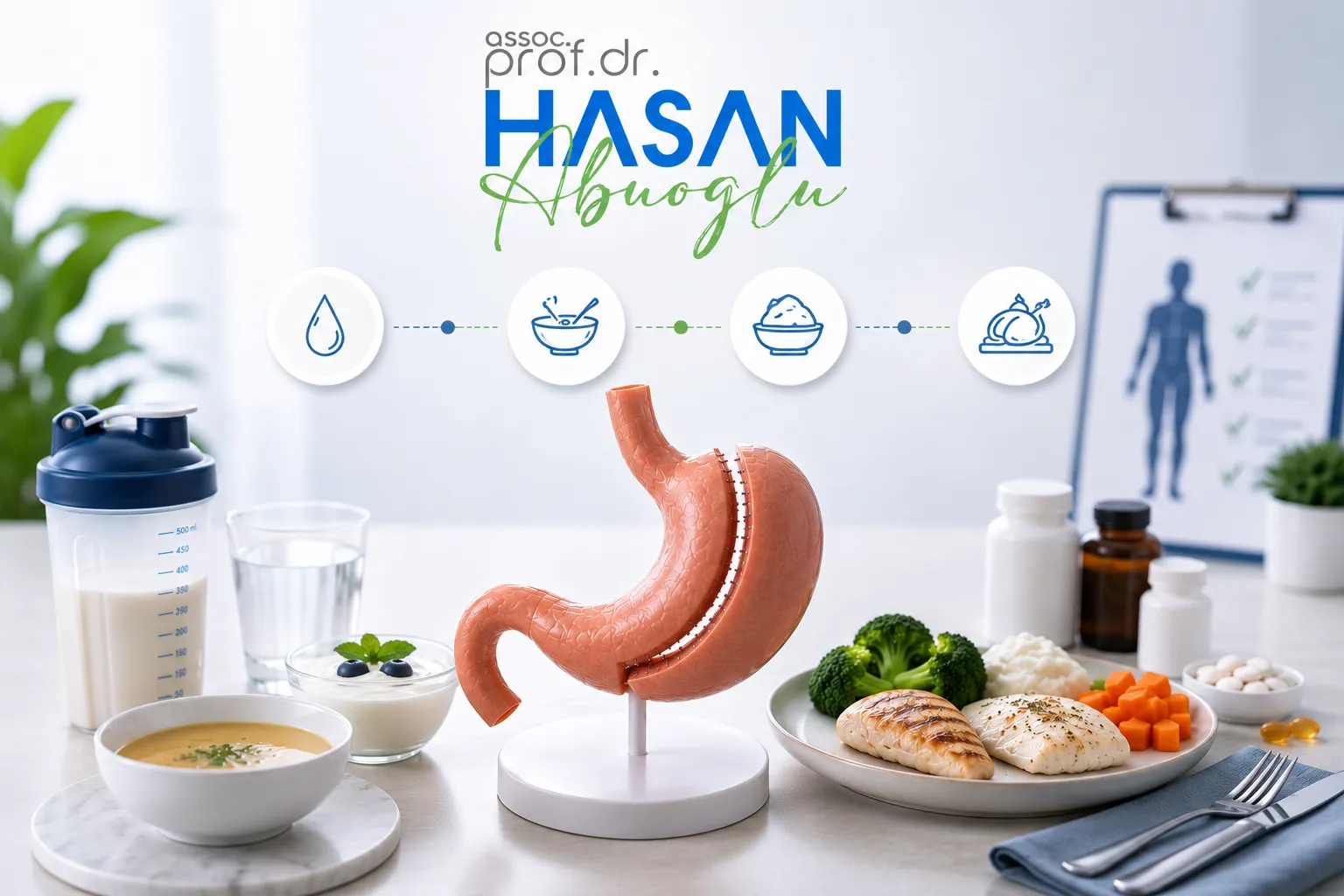
Nutrition after gastric sleeve surgery is a gradual transition that advances through 4 stages, from clear liquids toward solid food, and is typically completed in 6-8 weeks. The aim is to protect the reduced stomach, ensure adequate protein and fluid intake, and make new eating habits permanent. In this guide, we explain the diet rules for each stage, the protein and fluid goals, and the supplements. The timeline may vary depending on your clinic's protocol and your personal recovery — what is binding is the plan set by your physician and dietitian.
Nutrition stages: the general timeline
| Stage | Time range* | What is consumed? |
|---|---|---|
| 1. Clear liquids | The first days | Water, unsweetened herbal teas (such as linden), fat-free broth; sipped slowly. |
| 2. Liquids-purees | Weeks 2-4 | Strained soups, fat-free milk/ayran, yoghurt, unsweetened protein drinks; followed by smooth purees. |
| 3. Soft food | Weeks 4-6 | Boiled soft vegetables, well-cooked eggs, soft proteins with a meatball-like consistency, cottage-cheese-like cheeses. |
| 4. Transition to solid food | From week 6 onward | Gradually, meals of normal consistency that are protein-first and balanced. |
*Time ranges may vary depending on the clinic and the individual; your physician's or dietitian's plan takes precedence.
Daily goals: protein and fluid
Bariatric nutrition guidelines (ASMBS nutrition recommendations) target 60-80 g of protein per day and at least 1.5 litres of fluid in the postoperative period. Protein is the priority for preserving muscle mass and for recovery — which is why every meal starts with protein first. Fluids are sipped slowly throughout the day; no fluid is taken 30 minutes before or after meals, because the small stomach volume cannot accommodate both at the same time.
Vitamin and mineral supplements
Because of the reduced stomach volume and decreased variety of food, deficiencies in some nutrients can develop. For this reason, the following supplements are usually recommended:
- Multivitamin: basic daily support.
- Vitamin B12: because its absorption depends on stomach acid, monitoring and supplementation are required.
- Vitamin D + calcium: evaluated together to protect bone health.
- Iron: the risk of deficiency is higher, especially in female patients.
The type, dose, and duration of supplements are determined for each individual by your physician through regular blood tests. It is recommended that you do not start supplements on your own.
The golden rules of eating behaviour
- Take small bites and chew each bite 15-20 times.
- Spread the meal over 20-30 minutes; eating fast can lead to discomfort and vomiting.
- Stop at the first signal of fullness — do not force "the last two bites."
- Do not drink fluids while eating; leave fluids for between meals.
- Protein first: start with protein in the order on your plate.
- Set regular meal times; instead of snacking, choose a planned in-between meal.
What should be avoided?
Carbonated drinks (which stretch the stomach), sugary drinks and desserts (empty calories and dumping-like complaints), fried foods and high-fat foods (tolerance problems), and alcohol (its absorption changes and it is high in calories) are avoided entirely in the early period, and limited as much as possible afterwards. The time to start caffeinated drinks is planned according to your physician's advice.
The long term: making habits permanent
The first 12-18 months are the critical period in which the new eating pattern turns into a habit. In this period, regular dietitian appointments, blood tests, and adding physical activity to the plan (our exercise guide) form the foundation of long-term success. It is recommended that you make any change to your nutrition plan together with your follow-up team.
A Personalised Nutrition Plan
The postoperative nutrition process is planned individually with dietitian support. You can get in touch for more information.
Get in Touch